
Proper sleeping posture is crucial for an infant’s development, especially when using a baby bassinet. A baby’s spine is not yet fully developed, and improper sleeping posture can lead to health problems such as spinal curvature. As infants grow, their skeletal system continues to develop, so proper posture not only affects sleep quality but is also essential for the baby’s spinal health.

Correct way to use a baby bassinet
First, we need to understand how a baby’s spine develops. At birth, a baby’s spine has a C-shaped curve, which gradually develops into a more upright S-shaped curve over the following months and years. Therefore, proper sleeping posture can help a baby’s spine develop healthily.
1. The position of the baby’s head
Proper head positioning is crucial to preventing spinal curvature. Ensure your baby’s head and back are in a straight line, not tilted to one side or excessively drooping. When using a baby bassinet, your baby’s head should be naturally positioned in the middle of the pillow or crib, avoiding forward tilting.
One couple’s baby developed a degree of cervical curvature at six months old because their baby’s head was frequently tilted to one side due to the use of an unsuitable baby bassinet. After a doctor’s diagnosis, the baby’s neck curvature required treatment with an adjustable pillow and changes in sleeping position. Fortunately, with the parents’ efforts, the baby’s spinal problem was alleviated, but this experience also reminded them of important details to consider when using a bassinet.
2. The position of the baby’s back and buttocks
Ensure your baby’s back and hips maintain their natural curve and alignment. A baby bassinet should be designed to support the curve of your baby’s back, especially before their spine is fully developed. Choosing a supportive baby bassinet can help your baby maintain the correct spinal position and prevent excessive curvature.
The baby’s bottom should be at the deepest part of the bassinet to ensure adequate back support. Avoid placing the baby on the edge of the baby bassinet or on an overly soft mattress, as this may cause spinal sagging or compression.
3. Proper sleeping posture
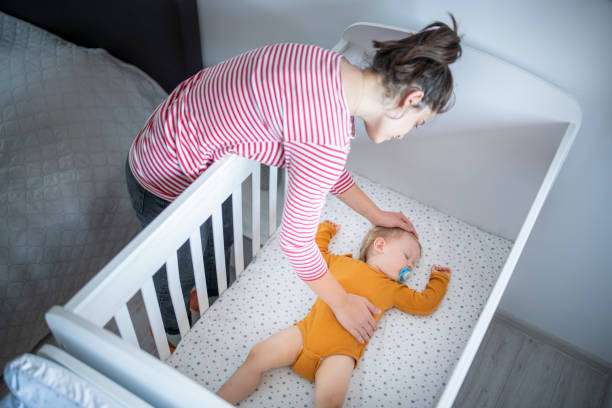
When placing your baby in a baby bassinet, keep their back flat and avoid side-lying or stomach-lying positions. While some parents believe that side-lying or stomach-lying positions are more conducive to soothing their babies to sleep, these positions can easily lead to spinal asymmetry or affect breathing.
Other precautions to avoid spinal curvature
1. Use a suitable cradle mattress
Choosing a cradle mattress that fits your baby’s weight and size is very important. A mattress that is too soft or too firm can affect your baby’s spinal health. The mattress material should provide adequate support without making your baby uncomfortable. A mattress that is too soft can cause spinal curvature, while a mattress that is too firm can feel pressure and affect sleep quality.
2. Regularly check your baby’s posture.
Parents should regularly check their baby’s sleeping position to ensure they are in the correct posture. This is especially important when babies are just learning to roll over; parents need to pay close attention to whether they are maintaining the correct sleeping position. Adjusting a baby’s sleeping position can help relieve discomfort by regularly changing their sleeping location.
3. Control the temperature and humidity of the sleep environment.
While temperature and humidity are not directly related to spinal health, they can indirectly affect a baby’s sleep quality. If a baby is uncomfortable due to excessively high or low temperatures, they may exhibit restlessness, leading to poor posture. Ensuring a suitable sleeping environment helps reduce these potential problems.
Common incorrect postures and health problems in baby bassinet
1. Incorrect Posture 1: Excessively Curved Spine
If your baby’s spine is frequently excessively curved while sleeping in a baby bassinet, this could be a result of an improperly designed bassinet or insufficient support. Maintaining a poor posture for extended periods can lead to scoliosis or other spinal development problems. A baby’s spine needs time to develop its normal physiological curves, and any incorrect sleeping position can disrupt this process.
2. Incorrect posture two: Head tilted excessively
If a baby’s head is tilted excessively or remains in one direction for extended periods, it can lead to uneven development of the neck muscles and spine. Parents should avoid keeping their baby’s head tilted to one side all the time, especially during sleep, to prevent the baby’s head from bending excessively or deviating from the midline.
3. Incorrect posture three: Baby sleeping on their stomach
While some parents believe that stomach sleeping helps relieve gas, this position can lead to spinal curvature and even affect respiratory system development. Stomach sleeping can also compress the baby’s chest and back, hindering normal spinal development. Always keeping your baby on their back is the safest option.
Summarize
Using a baby bassinet correctly is a fundamental skill every new parent needs to master. Choosing the right baby bassinet, mattress, and sleeping position can effectively prevent spinal curvature problems in babies. Parents should always pay attention to their baby’s sleeping position and environment to avoid improper postures that could cause spinal issues. Although a baby’s spine development takes time, parents can provide a solid foundation for their baby’s healthy growth through correct sleeping positions and attentive care.
If you’re choosing the right cradle or mattress for your baby, it’s crucial to select a product that offers good support and comfort. Our carefully chosen cradles and mattresses can help your baby maintain proper sleeping posture and promote healthy spinal development.
Click the link below to purchase our recommended quality products and give your baby a healthy and safe sleep environment!


