
In the first few months after birth, a baby’s physical and motor skills develop rapidly. Around 4 to 6 months, babies may start trying to roll over, which is an important milestone in their development, but it also brings new safety challenges to baby bassinet sleep.
As parents or caregivers, understanding baby bassinet safety tips and taking preventative measures in advance can effectively reduce the occurrence of accidents, allowing babies to sleep safely and comfortably during the rolling-over stage.
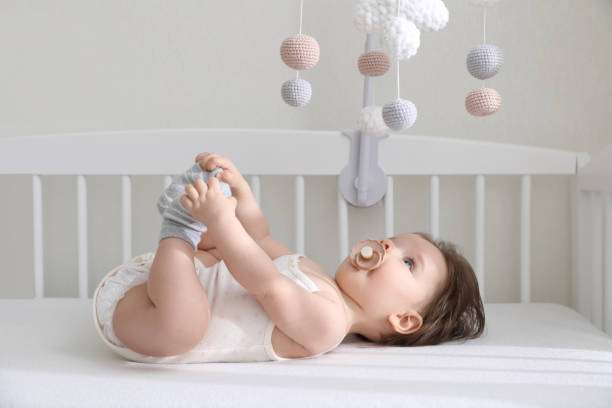
Risks during a baby’s rolling-over period
After a baby rolls over, the safety risks associated with baby bassinets mainly manifest in the following aspects:
Risk of falling out:
When babies try to roll over, kick their legs, or lift their heads, they can easily fall out of the baby bassinet if the baby bassinet is too low.
Suffocation risk:
Soft blankets, pillows, or plush toys inside a baby bassinet may cover the baby’s mouth and nose, increasing the risk of suffocation.
Risk of pinching or getting stuck: If
If the baby bassinet has too large a gap or an unstable structure, the baby’s hands or feet may get stuck or pinched.
Excessive shaking poses a risk
If the baby bassinet is shaken too much, it can easily bump into things or tip over.
My friend’s baby started rolling over at four months old. Once, the baby gently rolled to the edge of the bassinet but luckily was stopped by the cushion. This made me realize that even when leaving for a short time, I must ensure the bassinet is safe.
Key factors in choosing a safe bassinet
During a baby’s rolling-over phase, the safety of the bassinet is more important than its appearance. When choosing a bassinet, you can refer to the following criteria:
1. Fence height
The playpen should be at least 20-25 centimeters higher than the highest point of the baby to prevent them from falling out.
The spacing between fence posts should not be too large, usually no more than 6 centimeters, to prevent babies from getting their hands or feet stuck.
2. The mattress is flat and firm.
Use a mattress with moderate firmness to avoid the baby sinking into or suffocating due to a mattress that is too soft.
The mattress should fit snugly against the bassinet without any noticeable gaps to prevent the baby’s hands and feet from getting trapped.
3. The bassinet structure is stable.
The bassinet base is stable and not easy to tip over.
The bassinet can be fixed or has an anti-slip design to reduce the risk of shaking.
The bassinet’s frame and connectors must be sturdy to prevent it from loosening after the baby pulls on it.
4. Material and Safety Certifications
Using non-toxic and environmentally friendly materials to ensure baby’s safety.
Prioritize bassinets with child safety certifications, such as ASTM or EN 1130 standard certification.
bassinet setup after baby rolls over
When setting up a bassinet, safety, comfort, and simplicity should be the guiding principles:
Avoid unnecessary items.
Do not put pillows, plush toys, or thick blankets in the bassinet. Just put a thin blanket or a safety sleeping bag.
Use a baby sleeping bag or swaddle nightgown.
Sleeping bags can prevent babies from tripping when they kick off the blankets and roll over.
Allow your baby to move their hands and feet freely while reducing the risk of suffocation.
Keep the area around
The baby is well-ventilated to prevent overheating.
Baby bassinets should be kept away from curtains, cables, or other items that may be pulled.
Use a well-ventilated indoor environment and maintain a suitable temperature.
Daily safety usage tips
1. Observe the baby’s motor skills
When your baby first starts rolling over, you can use a baby safety camera or have a parent observe them closely.
Pay attention to the direction and frequency of your baby’s rolling over, and assess whether the baby bassinet is safe enough.
2. Control the baby bassinet’s rocking amplitude.
Avoid using excessive shaking during the baby’s rolling stage.
If the bassinet has an automatic rocking function, you can set it to a low amplitude to prevent it from tipping over.
3. Fix the bassinet position
Place the bassinet on a firm, level surface.
Avoid placing the baby near the bed, sofa, or windowsill to prevent them from bumping into things or falling when they roll over.
4. Regularly inspect the bassinet structure.
Check that screws, connectors, and brackets are secure.
Check the fence and mattress for damage or looseness.
For families who have used their bassinets for a long time, extra attention should be paid to the aging of parts.
I check the bassinet myself once a week, and I also check the screws and railings every time I clean it to make sure it’s safe and secure.
Transition plan during the turnaround period
As your baby becomes more adept at rolling over, the baby bassinet may gradually become unsuitable. You can consider transitional solutions:
Use a crib instead of a baby bassinet
The crib railings are higher, and the structure is more stable.
The baby can still be safe after rolling over.
Shorten baby bassinet usage time
After your baby rolls over, they can play in a playpen or safe area during the day.
The baby bassinet can still be used at night to ensure your baby’s safety while they sleep.
Use safety bed rails
For babies who are starting to roll over, crib bumpers can prevent them from falling off the bed.
For added safety, use with a firm mattress and sleeping bag.
Common problems and solutions
| question | reason | Solution |
| Babies are prone to rolling out after rolling over. | The fence is too low | Raise the crib height or change the baby’s crib |
| The baby’s mouth and nose were covered by a blanket. | Too many items in the bassinet | Use only a safety sleeping bag and avoid pillows and plush toys. |
| The bassinet rocked with a large amplitude. | bassinet design or unstable position | Secure the bassinet base and adjust the rocking amplitude. |
| Loose parts | Long-term use or screw aging | Regularly inspect and tighten screws, and replace parts as necessary. |
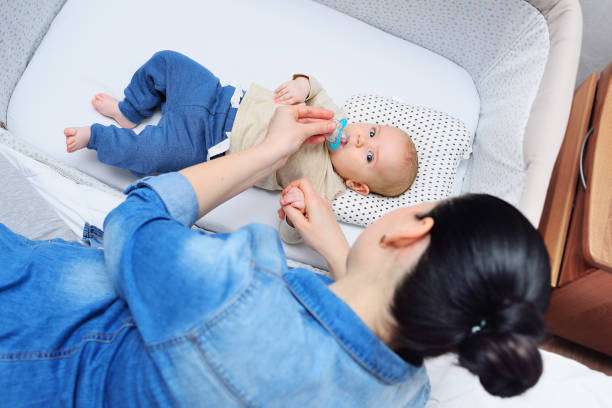
Summarize
When babies roll over, it’s an important stage in their development, but it also brings new challenges to bassinet safety.
Summary of key safety points:
Choose a bassinet with high railings, a sturdy structure, and safe materials.
Keep the bassinet simple, containing only a safety sleeping bag.
Fix the bassinet position and control the rocking amplitude.
Regularly inspect the bassinet structure, parts, and mattress.
Once your baby’s rolling ability improves, consider transitioning them to a crib or safety bumper.
With these measures, babies can sleep safely and comfortably during the rolling-over period, and parents can work or rest with peace of mind.
Now check the safety of your baby bassinet, make sure the railing is high enough and the mattress is flat, and remove any unnecessary items so that your baby can sleep peacefully during the rolling phase!


