Baby Bassinet ‘s Sleep Habits: Techniques to Help Your Baby Fall Asleep

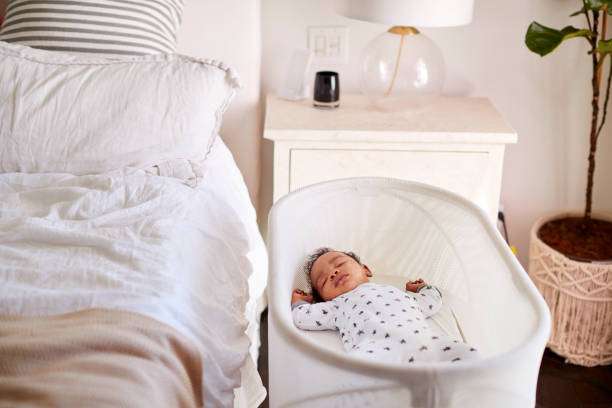
Newborns prefer baby bassinets because they offer a more comfortable and secure close-knit space than a large crib. This article provides practical tips on using a baby bassinet to cultivate good sleep habits and help your baby fall asleep, while emphasizing the most important principles of sleep safety.

Safety First: Baby Bassinet Usage Guidelines and Environmental Requirements
Supine sleeping position: Always let your baby sleep on their back (this is a key recommendation to prevent Sudden Infant Death Syndrome (SIDS)).
Sleep surface: Ensure the baby bassinet mattress is firm and cover it with a well-fitting sheet.
Clean the baby bassinet: Do not place pillows, soft blankets, plush toys, or other soft items inside. The gaps between the railings must meet safety standards.
Stability: Check the stability of the baby bassinet, especially the smart baby bassinet, and ensure that the screws are secure.
Sleep environment settings
Temperature control: Keep the room temperature comfortable and avoid overheating (overheating is a risk factor for newborns).
Keep the same room but a different bed: It is recommended that your baby sleep in your room but sleep alone in their own baby bassinet or crib for at least 6 months.
Fresh air: Ensure the bedroom has fresh and smoke-free air.
Baby Bassinet Sleep Aid Techniques: Mimicking Uterine Sensory Senses
Creating familiar background noises—soft music, the harmless noise of a fan, or white noise—can soothe newborns and simulate the sound environment inside the womb.
Rhythmic soothing (shaking and patting)
Gentle rocking: Moderate, rhythmic movement (rocking or swaying) helps babies feel comfortable and fall asleep.
Patting or swaddling: You can pat your baby gently in a baby bassinet or use a swaddle to increase their sense of security, but you should stop using a swaddle when your baby shows signs of rolling over.
Correctly use the duration limit of baby bassinet
in a smart baby bassinet all night. It is recommended to move the baby to a stable crib or flat surface after the child has fallen asleep.
Core strategies for cultivating good sleep habits
Establish a consistent bedtime routine
20-45 minutes before bedtime, schedule a relaxing and soothing activity (such as taking a bath, getting a gentle massage, telling a story, or singing a lullaby).
Get your child used to the routine of completing these activities before bedtime. Avoid using electronic screens or engaging in highly stimulating activities.
Help your baby distinguish between day and night
During the day: Ensure sufficient light, play and talk with your baby more, and avoid excessively long naps.
Nighttime: Dim the lights in the room before bedtime. If your baby wakes up in the middle of the night, keep the stimulation low (speak softly, feed in a dark room).
Timely detection of “sleep signals”
Observe your baby for signs of fatigue: rubbing their eyes, yawning, staring blankly, irritability, or crying.
When your baby is sleepy but not yet asleep (i.e., awake but drowsy), place them in the baby bassinet to help them associate the “putting down action” with the “sleep process.”
Advanced Techniques: Helping Your Baby Learn to Fall Asleep Independently
Break the habit of “nursing to sleep” and excessive rocking.
Separate feeding or eating from sleep (feed at least 1 hour before bedtime).
When your baby cries, avoid shaking them excessively or developing the habit of holding them in your arms to soothe them to sleep.
“Gradual soothing” for dealing with nighttime awakenings
When you hear your baby crying at night, don’t rush to pick them up. Wait a few minutes and see if your baby can calm down on their own.
If the baby is still crying, go to the baby bassinet and gently soothe them (pat them lightly, speak softly), but do not pick them up. Leave after 1-2 minutes of soothing.
Gradually increase the time between your baby crying and checking on them again to help them learn to soothe themselves.
Consider using a pacifier
Studies have shown that using a pacifier while sleeping can help reduce the risk of SIDS.
For breastfed babies, it is recommended to introduce pacifiers a few weeks after establishing a stable breastfeeding habit.
Summarize
While a baby bassinet is a great help during the transition period, regular routines, a safe sleep environment, and consistent methods of putting the baby to sleep are key to cultivating good sleep habits.
Consistency: Parents should be reminded that developing good sleep habits requires determination, perseverance, and the cooperation and participation of all caregivers in the family.


