Reducing the risks of co-sleeping: Why is a bedside baby bassinet the first step in safe, independent sleep training?

As new parents, we all yearn to establish a close bond with our newborns, especially at night. Many cultural traditions and parenting schools of thought advocate rooming-in and bed-in, believing that this helps with breastfeeding and parent-child attachment.
The baby bassinet is safe. However, leading authorities such as the American Academy of Pediatrics (AAP) have repeatedly emphasized that bed-sharing is one of the main factors contributing to Sudden Infant Death Syndrome (SIDS) and the risk of accidental suffocation. Faced with this difficult choice, how can we ensure the baby’s safety while gradually cultivating the child’s ability to sleep independently without sacrificing intimacy?
Facing the Risks: Hidden Dangers and Misconceptions about Co-sleeping
Co-sleeping, where parents and infants sleep in the same adult bed, is widely considered an unsafe sleeping practice in the United States and Europe.
While co-sleeping itself does not directly cause SIDS, it significantly increases the controllable risk factors for SIDS:
Suffocation and crush risks: Adult mattresses and pillows are often too soft, and infants may sink into them, leading to suffocation. Parents or siblings who sleep in the same bed may also accidentally roll over onto the infant while sleeping.
Overheating risk: Covering an infant with a blanket or a heavy adult blanket can easily cause the infant’s body temperature to rise too high, and overheating is one of the known risk factors for SIDS.
Unsafe environment: There may be gaps, ropes, or other items near an adult bed that could entangle or trap a baby.
Bedside baby bassinet: The perfect combination of intimacy and security
A bedside baby bassinet is the ideal solution to the dilemma of wanting closeness but fearing insecurity. It’s a specially designed baby sleeping area that can be safely attached to the side of the parents’ bed and offers the following key advantages:
A friend of mine, who deeply loves the feeling of being close to her baby but is anxious about the risks of SIDS, told me that a bedside baby bassinet was the wisest investment she made on her parenting journey. The answer lies in a golden transition tool: a bedside baby bassinet.
Reduce risks and maintain a dedicated sleeping area
The bedside baby bassinet provides an independent sleeping surface for babies that is flat, firm, and free of soft bedding.
Physical isolation: The baby is protected by a fence, completely eliminating the risk of being covered by an adult’s blanket or being crushed.
Meets AAP recommendations: It strictly follows the safe sleep guidelines of “sharing a room with parents, but not a bed.”
Convenient for nighttime feeding, improving parents’ sleep quality
For breastfeeding mothers, a bedside baby bassinet is a huge boon for nighttime feedings.
Immediate response: Parents can hear every movement of the baby and react immediately without having to get up.
Efficient Feeding: My friend told me that her favorite thing about the Baby Bassinet is that she can easily reach her baby to breastfeed by simply turning to her side and then put her back down, all without leaving her warm bed. This greatly reduces feeding time, allowing both parents and baby to return to deep sleep more quickly.
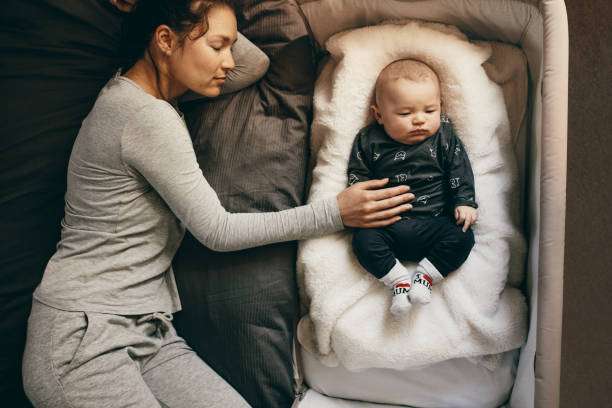
Establishing boundaries lays the foundation for independent sleep.
bedside baby bassinet is that it serves as a transitional tool, helping babies develop an awareness of “their own sleep space” from birth.
Sensory connection: Babies can see, smell, and sense the presence of their parents, which gives them a sense of security, but they learn to fall asleep and wake up in their own crib.
Gradual transition: When babies grow up and need to move to their own room or a larger crib, the transition will be smoother because they are already used to their own sleeping surface.
Independent sleep training: Start with a baby bassinet by the bedside
How can you maximize the use of your bedside baby bassinet for independent sleep training? The key is to adhere to the following principles from day one:
“Put the baby in a sleepy but awake state, not in a drowsy state”: The goal is to place the baby in the baby bassinet while they are drowsy but alert. This is known as “self-sedation” or “self-soothing” and is the foundation for the ability to fall asleep independently.
Maintain consistency: Always use a baby bassinet, whether for daytime naps or nighttime sleep. If holding or co-sleeping is allowed during certain periods, the baby will have difficulty understanding sleep patterns.
Establish a personal ritual: Perform a short, repetitive bedtime ritual at the baby bassinet (such as changing diapers, putting on a sleeping bag, or singing softly) to associate the baby bassinet with relaxation and sleep.
In conclusion:
Parenting is an art of balance. The bedside baby bassinet offers an innovative way to avoid the trade-off between safety and intimacy. It creates a dedicated mini-safe zone next to the parents’ bed, satisfying their need for intimacy with their newborn while strictly adhering to safe sleep guidelines.
By training your baby in a bassinet at the bedside, we are not only protecting your baby from physical risks but also laying the foundation for independent sleep habits that will benefit them for life.
At what age do you think it’s the latest you should replace your baby’s crib with a separate one? Feel free to share your experiences and opinions in the comments!


