Unlock Sweet Sleep: The Ultimate Baby Bassinet Buying Guide for New Parents

Welcome to the world of new parents! You may already have a mountain of items prepared for your baby’s arrival, but among all these items on the list, there is one small thing that is essential for you and your baby’s first few months: a baby bassinet.
A baby bassinet is an ideal sleeping place for newborns (usually in the first six months after birth). Smaller and more private than a crib, it provides a safe, comfortable, and familiar womb-like environment for the baby, soothing them with gentle rocking. I like to keep the bassinet next to my crib for easy nighttime feedings and comforting, allowing me to get a little more sleep.
But with the wide variety of cradle styles and functions on the market, how do you choose a truly safe, practical, and cost-effective cradle? This guide will break down the key factors you must consider during the selection process, helping you make an informed decision that is both safe and suits your family’s lifestyle.
Safety Above All Else: The Cradle’s Absolute Bottom Line
Infant sleep safety is a non-negotiable red line. Regardless of your budget, first ensure that the products you choose meet all mandatory safety standards.
1. Structural safety:
Sturdiness: The cradle must be very sturdy so that it will not tip over even with slight shaking or bumps (such as when the older child is curiously holding the cradle to look at the baby).
A friend of mine once had a cradle that his dog curiously nudged with its nose when it was placed in the living room, almost causing it to tip over. Therefore, structural stability is not an exaggeration; it’s a crucial factor in ensuring the safety of the base.
Side Design and Breathability: Whether the sides are made of rigid slats or soft mesh, breathability must be ensured. If a slat design is chosen, the gap width must meet safety standards to prevent the baby’s limbs or even head from getting stuck. If a fabric side is chosen, a highly breathable mesh fabric should be used.
2. Mattress: Firmness and fit are key.
The mattress is the part of the baby bassinet that has the closest contact with the baby’s body, and it is also the place where safety hazards are most likely to occur.
Flatness and stability: The sleeping surface should remain level when at rest, and any tilt angle should generally be less than 100°.
Perfect fit: This is crucial. The mattress must fit snugly against the baby bassinet’s inner walls, with no gaps at the edges. Any excess space could cause the baby’s head to get stuck or their face to be obstructed, posing a suffocation risk.
Medium firmness: The mattress should not be too soft or too thick. The American Academy of Pediatrics emphasizes that babies should sleep on a firm, flat surface. A mattress that is too soft increases the risk of Sudden Infant Death Syndrome (SIDS).
3. Material Inspection Checklist: Keep away from hazardous substances
Newborns have very sensitive skin and often bite or chew on everything around them. Please check carefully before purchasing:
Paints and coatings: Ensure that all paints, coatings, and plastic materials used by the baby bassinet are non-toxic, lead-free, and phthalate-free.
No small parts/sharp objects: Inspect the assembled parts of the baby bassinet to ensure there are no small screws, small caps, or any sharp edges that could come loose.
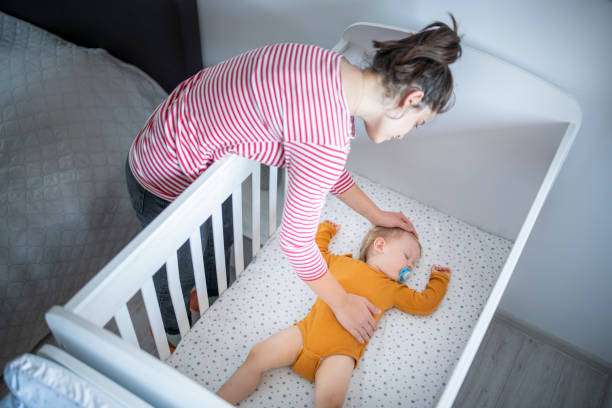
Function and Lifestyle: Which do you really need?
A baby bassinet is no longer just a simple crib with legs. Modern designs incorporate many technological and convenience considerations; you should choose one based on your lifestyle and available space.
1. Technology-driven vs. Traditional
| baby bassinet type | Suitable for | advantage | shortcoming |
| Manual baby bassinet | Families with limited budgets, small spaces, or those who prefer to comfort their loved ones personally. | Affordable, lightweight, and easy to move, with a simple structure and easy to clean. | Parents need to manually rock the machine the entire time. |
| Electric cradle/comforter chair | Families who want to “free up their hands” or whose babies especially need constant comfort. | Automatic rocking/vibrating, built-in white noise or music, and some models have a crying sound sensor. | It is expensive, requires a power source, and has too many functions that may be distracting. |
Many new parents initially believe, “We don’t need an electric rocker; we’ll rock it manually.” But the reality is often at 3 a.m., all you want to do is press a button and fall back asleep. Investing in an electric soothing chair with a gentle rocking function (as an aid) can be a stress-relieving tool in your parenting kit.
2. Space Management and Attachment Parenting
Bedside baby bassinet: This type of baby bassinet has a side rail that can be lowered or pulled open, allowing it to be placed directly next to your bed. It’s a superhero for breastfeeding mothers, allowing you to easily feed, burp, or check on your baby at night without getting up, achieving the intimacy of “co-sleeping” while not violating the safety principle of “separate sleeping.”
Portable/Travel Baby Bassinet: If you frequently take your baby to friends’ houses, grandparents’ houses, or on short trips, a lightweight, quick-folding, portable baby bassinet with a handle is ideal. It allows you to provide your baby with a familiar and safe sleeping environment anytime, anywhere.
Baby Bassinet ‘s Lifespan: Understanding When an Upgrade is Needed
A baby bassinet is not a long-term investment; it’s simply a “starter village” before your baby transitions to a crib. You must be clear about when it’s time to let your baby graduate and move to a larger crib.
A baby bassinet is primarily limited by two hard standards:
Weight limit: Most cradles have a weight limit of around 9-15 kg (20-33 lbs), but many babies have to leave the cradle before reaching this weight.
Developmental milestones: Once your baby starts to roll over, kneel, or prop themselves up on their elbows, you must stop using the cradle immediately!
This rule is very important. A baby who can roll over or is trying to sit up could fall out of the cradle at any time, causing serious injury. Please remember and strictly follow the maximum weight and age recommendations given in the product instructions.
Convenience and Added Value: Small Details That Make Life Easier
After meeting all safety requirements, you can start considering some details that can improve your daily parenting experience:
Cleanliness-friendly: Newborns often spit up, vomit, or leak urine. Choosing removable, machine-washable mattress covers and sheets will save you a lot of trouble.
Mobility and Storage: If you plan to move the cradle from the bedroom to the living room during the day, a model with locking wheels is the best choice. If you have limited space, a cradle that is easy to fold with one hand and quick to store can save you valuable space when not in use.
Smart Features (Add-ons): Additional features such as a night light, timer, adjustable rocking speed, or a built-in white noise generator can support the soothing process. However, please remember that these features are only bonuses and should never come at the expense of safety.
Summarize:
Choosing a baby bassinet is essentially defining your early parenting philosophy—whether you prioritize cutting-edge technology or prefer a more intimate and traditional approach to comforting your child.
When faced with all the features and prices, always focus on safety certifications, a robust construction, and a perfect fit to the mattress. Remember, the most expensive cradle isn’t necessarily the safest.
Before purchasing, consider checking independent reviews online or asking other parents in parenting communities for their real-life experiences. Have you found the perfect cradle for your baby? Share your experience and top brand recommendations in the comments!


