
Generally speaking, most babies enjoy the enveloping feeling that a baby bassinet provides. The reason is simple—this spatial experience is closer to their environment in the womb.
In the womb, the space is not completely open but rather warm and intimate and has a sense of boundary. After birth, if the sleeping space is too large or too empty, some babies may exhibit restlessness, be easily startled, and frequently wave their arms.
A well-structured baby bassinet typically possesses three characteristics:
defined boundaries, the space is relatively compact, and the visual range is not diffused.
These things will make it easier for the baby to relax.
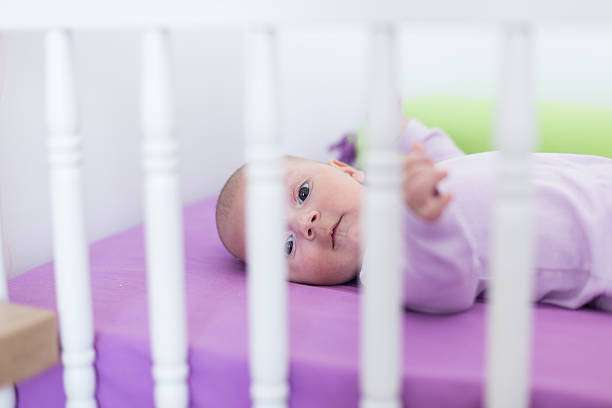
Why does a feeling of being “surrounded” make it easier for babies to fall asleep?
1. Reduce the frequency of startle reflex triggering.
Newborns exhibit a noticeable “startle reflex,” where their arms suddenly open. This is a sign that their nervous system is not yet fully mature.
When the space is too large, the range of limb movement is greater, and reflexes are more easily amplified, thus waking oneself up. The enclosing structure of a cradle can reduce this disturbance to some extent.
Many families have noticed that they don’t sleep well in a large bed but feel more secure in a baby bassinet. This is not a coincidence.
2. Provide boundaries → Provide a sense of security
For babies, a space where they “cannot see the boundaries” is more stimulating than free.
A clearly defined cradle gives a baby a sense of protection and being surrounded. Just like adults prefer to sit against a wall rather than stand in the middle of an open space when they are tired.
A friend of mine had her baby sleep on the side of the bed until the baby was a month old, and the baby woke up frequently at night. After switching to a baby bassinet, the baby’s continuous sleep time increased significantly, and the process of falling asleep became much smoother.
3. Slight shaking and a sense of being enveloped is a natural combination.
The sense of being enveloped provides a foundation of security, while the gentle rocking provides a sense of rhythm.
The slight swaying of a baby bassinet can be simulated:
Walking rhythm baby bassinet embrace rhythm baby bassinet heartbeat beat
When these two are combined, it is a very effective way to soothe many babies.
Do all babies like baby bassinets?
No. It must be made clear here that there are significant individual differences.
Generally, they are divided into three categories:
Prefers a baby who is wrapped up
Baby falls asleep quickly; baby falls asleep easily when held; baby wakes up easily when put down; baby likes to be wrapped up.
These types of babies usually adapt very well to baby bassinets.
Neutral, adaptable baby
After a few days of adaptation, the baby bassinet becomes more stable and less sensitive to changes in space. A baby bassinet’s sleep quality is more affected by feeding rhythm.
Baby bassinets for this type of baby depend on overall routine management.
Spatial sensitive baby
A small number of babies may exhibit the following:
Bassinet babies like to stretch out their arms and legs; they get restless when their space is restricted. Bassinet babies are better suited to flat, open sleeping areas.
In this case, you can choose a more spacious baby bassinet or transition to a crib.
A sense of envelopment ≠ a sense of oppression: the key lies in the design.
A truly comfortable baby bassinet won’t put pressure on the baby but rather provide a “safe boundary.”
The design should meet the following requirements: spacious interior, flat and breathable mattress, soft surrounding protection, good air circulation, and unobstructed vision.
A high-quality baby bassinet emphasizes a sense of “enclosure” rather than a sense of “closedness.”
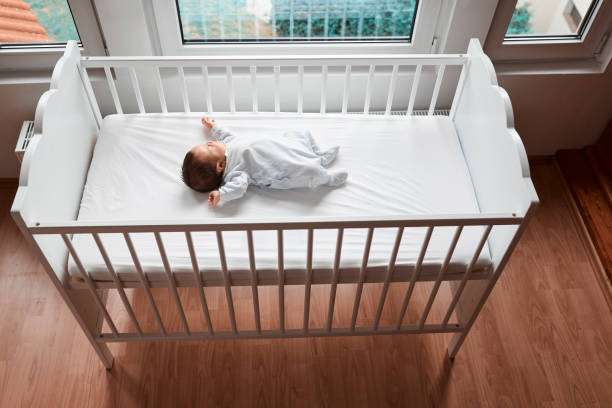
The need for a feeling of being enveloped varies at different ages.
0–3 months
The cradle’s advantages are most apparent
during the stage when the child most needs a sense of being enveloped
, making it easier to establish a sleep rhythm.
3–6 months
As babies begin to roll over,
and require more space,
A larger baby bassinet or a transitional model can be used.
6 months+
As children become more active,
Most families will gradually transition to a crib.
How can I tell if my baby is comfortable in a cradle?
You can observe these signals:
Adapted well:
The baby cries for a shorter time after being placed in the pot; the baby calms down after being rocked; the baby sleeps for a longer period of time; the baby’s hands and feet relax.
Inadaptability:
The baby is constantly irritable, resists being put in, has more fragmented sleep, and is in a tense position.
Useful tips for using a cradle
Hold him to sleep first, then put him in your arms.
the baby in the bassinet while the baby is fully awake, as they are more likely to resist.
Keep familiar smells
Use a regular blanket or sleeping bag.
Control the amplitude of the rocking
Gentle movements are sufficient; there’s no need for vigorous shaking.
Establish a fixed bedtime routine
Bathing → Feeding → Quiet → Baby bassinet
Repetition will form a conditioned reflex.
Common Misconceptions
Myth 1: The bigger the space, the better.
This is not the case for newborns.
Myth 2: Baby crying means he doesn’t like baby bassinet
It might be due to incorrect timing.
Myth 3: Feeling surrounded will affect development
As long as the size is appropriate, it will not affect athletic development.
FAQ
Q1: Will a baby bassinet cause babies to become dependent on it?
No. It’s merely a sleep-supporting environment, not a source of behavioral dependence. Sleep habits arise from rhythms, not from a single sleeping device.
Q2: Is a baby bassinet suitable for sleeping through the night?
It’s okay for newborns, but you need to ensure that the mattress is flat, there are no loose or excess soft items, the mattress is well-ventilated, and the mattress is structurally stable.
Q3: What should I do if my baby keeps trying to reach out in the baby bassinet?
You can choose a wider baby bassinet or use a lightly wrapped sleeping bag.
Q4: Is a baby bassinet safer than a crib?
The safety of both depends on the design standards and usage methods, not the type itself.
Q5: When should I stop using a baby bassinet?
Typically, when a baby starts rolling over, their weight is nearing its maximum, or their range of motion significantly increases, they should transition to rolling over.
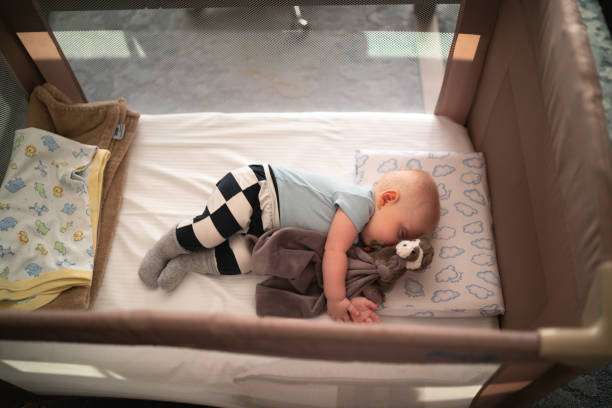
Summarize
From a physiological and psychological perspective, most babies do indeed prefer a sleeping space that feels enveloping, and a baby bassinet provides just such a close, safe, and rhythm-friendly environment.
When the environment matches the baby’s circadian rhythm, sleep quality often improves significantly.
If you’re struggling with your baby’s difficulty falling asleep or frequent night awakenings, consider a baby bassinet with a safe structure, stable support, and good ventilation. A suitable sleeping space is often the first step to improving sleep. Choosing a professionally designed model will make the caregiving process much easier.


