Baby Bassinet Height Selection and Baby Comfort: Creating a Safe and Comfortable Sleep Environment

A baby bassinet is a top choice for many families, helping babies sleep soundly and making it easier for parents to care for them. However, many parents overlook a crucial issue: the height of the baby bassinet directly impacts the baby’s comfort and safety. This article provides comprehensive guidance for parents from three aspects: height selection, baby comfort, and practical tips, helping babies grow up healthily and comfortably.
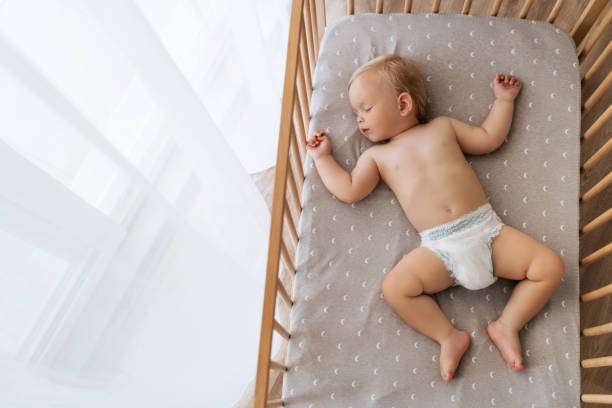
Why does baby bassinet height affect comfort?
A baby’s comfort in a bassinet depends not only on the firmness and support design of the mattress but also closely on the height of the bassinet. A baby bassinet that is too high or too low can cause potential problems.
Too high: When the baby is in and out of the cradle, it is inconvenient for parents to hold and lift the baby, which can easily lead to accidents and may also affect the baby’s sense of security.
Too low: It is inconvenient for parents to take care of the baby, which may lead to excessive bending over and back discomfort. At the same time, the baby may feel isolated in a low position, which will affect the sleep experience.
A suitable baby bassinet height allows the baby to maintain a natural posture while sleeping, supporting the head and spine, while also making it easier for parents to provide daily care.
Baby Bassinet Height
1. Adjust according to the baby’s size and growth stage.
The baby bassinet should be selected based on the baby’s height and neck support needs:
Newborn period: The cradle should be level with or slightly lower than the parents’ waist to make it easier to gently pick up the baby.
3-6 months: As the baby becomes more active, the bed can be lowered appropriately to ensure the baby’s safety when turning over.
For babies 6 months and older: If your baby starts to crawl or sit up, consider a cradle with safety rails and height adjustment to prevent accidental falls.
I used to have back pain from bending over easily when holding my baby because the cradle was too low. Since choosing an adjustable height cradle, daily care has become much easier, and the baby is also more comfortable.
2. Consider parents’ height and ease of use.
Baby bassinet height affects not only the baby but also the parents:
Parents’ height should be appropriate: The ideal bed height should be around the parents’ waist, which makes it easy to pick up and drop the baby and reduces back strain.
Convenient for daily use: The appropriate height makes it easy to operate when changing diapers, burping, and soothing a crying baby, improving care efficiency.
When choosing the height of a baby bassinet, it’s advisable to first measure the position of the parents when they naturally bend over to the bed surface while standing to ensure comfort.
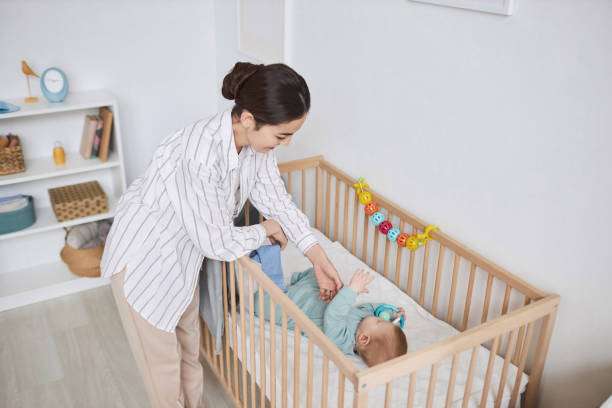
3. Advantages of the height-adjustable design
Modern baby bassinet models often offer multiple height adjustment settings, which is crucial for the baby’s comfort and safety as they grow.
Newborn period: A high position makes it easier for parents to hold and feed the baby.
Rolling-over period: Lower the bed surface to reduce the risk of injury when the baby rolls over.
Growth period: can adapt to the baby’s gradually increasing activity level.
Height-adjustable cradles not only extend their lifespan but also provide a continuous comfortable experience as the baby grows.
Comprehensive consideration of baby’s comfort
Besides the baby bassinet height, a baby’s comfort is also closely related to the following factors:
Mattress support: A soft yet supportive mattress ensures that the baby’s spine and head remain in a natural position.
Side protection: The gentle side panels prevent the baby from bumping into things and increase their sense of security.
Breathability: Good breathable materials keep the baby comfortable in the cradle, preventing sweating or stuffiness.
Cradle stability: The cradle is at a suitable height and is stable, so it will not tip over when the baby rolls over or moves slightly.
I’ve noticed that babies tend to wake up easily when they roll over in a higher cradle, but after lowering the bed height and adding gentle support, their sleep becomes more stable and their comfort level noticeably improves.
Optimize the user experience of baby bassinet height.
Adjust the height regularly: Adjust the height of the cradle as needed based on your baby’s growth and activity level.
Combine sleeping posture: primarily supine, with appropriate height and mattress support to reduce pressure on the head and spine.
Observe your baby’s feedback: Your baby’s sleep quality, rolling over, and state upon waking are all important indicators of comfort.
Safety first: When adjusting the height, ensure the cradle is securely locked to prevent slipping or tipping.
In daily use, I adjust the height of the cradle based on how often my baby rolls over and their mood upon waking, ensuring that my baby is both safe and comfortable.
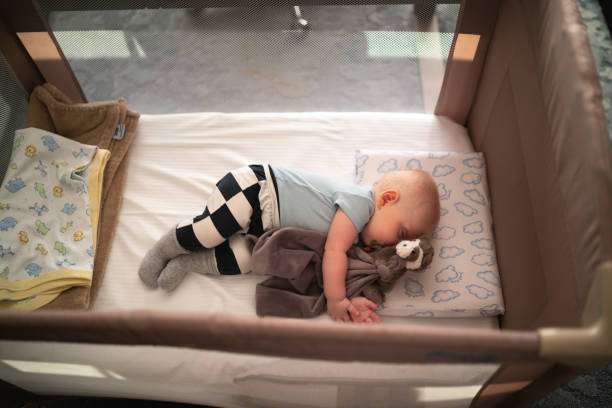
Summarize
A baby bassinet not only affects the ease of use for parents but also directly impacts the baby’s comfort and safety. Choosing the right bassinet height, combined with a supportive mattress, breathable materials, and protective design, allows the baby to grow healthily in a comfortable environment. An adjustable-height bassinet is the ideal choice for providing continuous support as the baby grows.
Want to create a comfortable and safe sleep environment for your baby? Check out our curated selection of baby bassinet products to ensure your baby enjoys peaceful and comfortable sleep at every stage of their growth.


