If your baby resists the baby bassinet? A comprehensive guide to help you handle it easily.

For new parents, a baby’s resistance to the baby bassinet is almost an unavoidable challenge. Despite carefully preparing a comfortable cradle, the baby often cries and refuses to stay in it, causing anxiety and helplessness. I’ve also experienced this predicament: every time I held my baby to sleep and finally managed to put him in the cradle, he would immediately cry even more. After repeated attempts and adjustments, I’ve developed a systematic method to help babies gradually adapt to the cradle, allowing parents more rest time.
This article will provide a comprehensive analysis of your baby’s resistance to being rocked, covering reasons, coping strategies, practical tips, and common misconceptions.
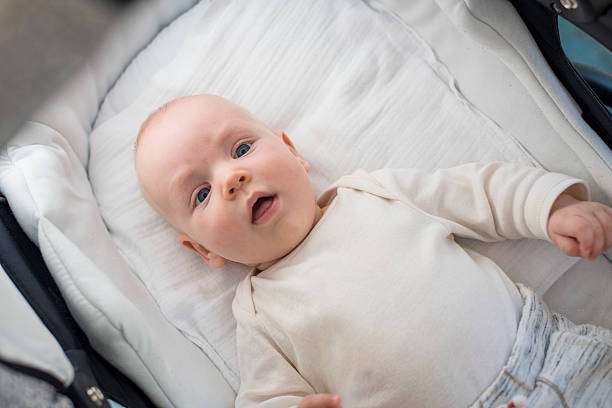
Why babies resist being rocked
Babies often don’t want to stay in the baby bassinet for a variety of reasons, not just one.
1. Lack of security
Newborns are uneasy about the change in environment after leaving the womb. While the baby bassinet is comfortable, it’s still unfamiliar to them, lacking the embracing feeling and familiar scent of the mother, which can easily cause anxiety. When babies cry in their cradles, it’s often not because they’re being naughty but rather an expression of insecurity.
2. Unsuitable environment
Excessively high or low temperatures, bright light, excessive noise, or unsuitable bedding materials can all cause babies to resist being rocked in their cribs. Babies have very sensitive senses, and even the slightest discomfort can trigger crying.
3. Unmet physiological needs
Physiological issues such as hunger, wet diapers, colic, and gastrointestinal discomfort are common reasons why babies resist being rocked. Before these issues are ruled out, the baby’s crying is often unrelated to the cradle itself.
4. Habitual issues
and may feel uncomfortable and resist being suddenly put into a baby bassinet. Babies need time to adapt to new sleeping habits.
5. Individual differences
Every baby has different personality and sensitivities. Some babies are naturally more receptive to being held, while others are more comfortable in a cradle. Parents need to adjust their approach flexibly according to their baby’s individual characteristics.
Practical methods to help your baby resist baby bassinet
1. Create a sense of security
Use a swaddle or blanket: Gently wrap your baby in the cradle to make them feel warm and safe, mimicking the feeling of being wrapped in the womb.
Place familiar scents: You can place clothes that the mother has worn or a small blanket that the baby usually uses next to the cradle so that the baby can feel familiar scents and reduce the sense of unfamiliarity.
I found that putting the baby’s usual blanket into the cradle calmed him down much faster, which is really useful.
2. Gradual transition method
Short-term placement: Initially, place the baby in the cradle for only a few minutes each day to allow them to gradually adapt to the cradle environment.
Gradually increase the time: After the baby gets used to a few minutes, gradually increase it to ten minutes or more, and eventually the baby can fall asleep in the baby bassinet all night.
The companionship method: In the beginning, you can sit next to the cradle and gently pat and soothe the baby, letting the baby know that the parents are by their side.
3. Adjust the cradle environment
Temperature control: The room temperature should be kept at around 22℃ for optimal comfort, avoiding excessive heat or cold.
Soft lighting: Use a nightlight or blackout curtains at night to avoid strong light stimulating the baby.
Bedding selection: The mattress should be of medium firmness, breathable fabric, and comfortable against the skin, avoiding slippage or being too firm.
Gentle shaking: Gentle shaking can soothe the baby, but avoid excessive shaking to prevent startling them.
I laid a soft, breathable mattress on the cradle, kept the room temperature comfortable, and gently rocked it a few times. The baby quickly calmed down and fell asleep.
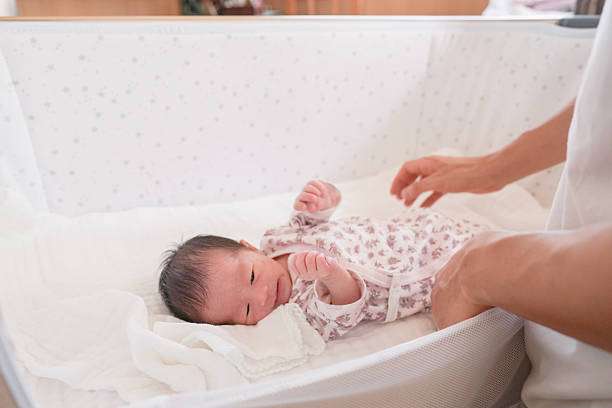
4. Combine with comforting items
Pacifiers: can relieve a baby’s anxiety and help them fall asleep.
Comfort toys or small blankets: Soft and safe toys can be a source of comfort for babies, but it is important to ensure safety and avoid the risk of suffocation.
5. Adjust your sleep schedule and mood.
a bassinet when they are tired, hungry, or physically uncomfortable.
Common Misconceptions About Babies Resisting Cradles
Pick up the baby immediately when they cry.
Moderate crying is a normal reaction for babies adapting to a new environment. Excessive parental intervention may cause the baby to become dependent on or resistant to the cradle. Observe for a few minutes first to ensure safety before taking any soothing measures.
A larger
A baby bassinet is better; an oversized bassinet can make a baby feel empty and insecure. Choosing a bassinet that fits your baby’s size will make it easier for them to fall asleep peacefully.
The more vigorously you shake, the more effective
It is. Excessive shaking can frighten the baby and may also affect spinal development. Gentle and moderate shaking is sufficient.
Environmental factors
such as temperature, light, noise, and bedding material can all affect whether a baby accepts being rocked in a cradle. Parents often overlook these details.
Personalized adjustment strategy
Adjust according to the baby’s stage: Newborns can fall asleep in a cradle, but as the baby’s mobility increases, they need to gradually transition to a crib.
Observe your baby’s preferences: Every baby reacts differently; some like gentle rocking, while others prefer stillness. Parents need to adjust accordingly.
Combine this with daytime routines: allow your baby to rest in the baby bassinet during the day to gradually form a habit.
At first, my baby didn’t want to stay in the baby bassinet at all, but I persisted in putting him in the bassinet for a few minutes every day. Gradually, he started to reach out to the bassinet on his own, and he was able to fall asleep peacefully at night.
FAQ
Q1: What should I do if my baby keeps resisting being rocked in the crib?
A1: First, check for physiological needs, such as hunger, wet diaper, or colic; second, adjust the environment, bedding, and routine; then, gradually help your baby adapt to the crib by swaddling, using comforting items, and spending time with them.
Q2: Where is the best place to put a cradle?
A2: Place it in a quiet room with soft light, a suitable temperature, and good air circulation, avoiding direct air conditioning or direct sunlight.
Q3: Can a baby bassinet replace a crib?
A3: A baby bassinet is suitable for newborns up to 3-6 months old, providing a sense of security and convenience. As the baby’s rolling and mobility increase, they should transition to a crib.
Q4: How to prevent the cradle from becoming a dependency for the baby?
A4: Rock gently, gradually reduce the rocking time, and gradually let the baby fall asleep independently in a quiet environment.
Q5: Will picking up a baby when they cry affect their adaptation to the cradle?
A5: You can pick them up briefly to soothe them, but be careful not to interfere too much. Gradually let your baby learn to be calm in the cradle.
Summarize
It’s common for babies to resist being rocked in a crib, so there’s no need to be overly anxious.
Creating a sense of security, a comfortable environment, a gradual approach, and the use of comforting items are the core methods.
Patience and emotional stability are more important than any skill.
Recording your baby’s daily routine, observing patterns, and having family members participate can make the adaptation process smoother.
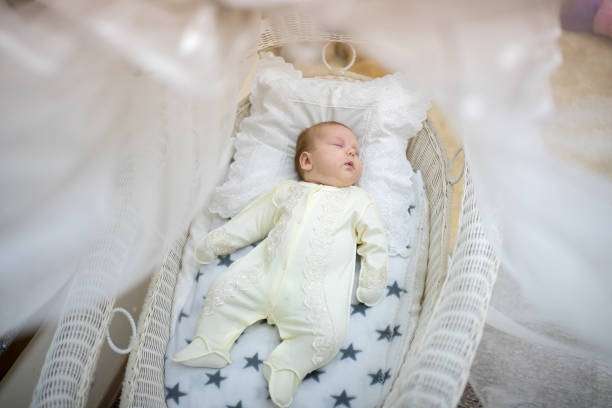
I’ve found that as long as parents are patient and make adjustments to the environment and habits, babies will eventually come to love the cradle and fall asleep more soundly at night.
A baby’s sleep directly impacts their growth and the quality of rest for parents. Choosing the right baby bassinet, combined with proper soothing techniques, can help your baby fall asleep more safely and comfortably.
Check out our recommended baby bassinet now to help your baby get sweet sleep and give parents a break!


