Do baby bassinets help mothers recover from postpartum emotional instability?

Postpartum mood swings are a common experience for many new mothers. Hormonal fluctuations, lack of sleep, childcare stress, and role transitions can all make mothers more prone to anxiety, sensitivity, crying, fatigue, and even early signs of postpartum depression. Throughout the recovery process, a safe, stable, and easy-to-use baby bassinet not only provides a resting space for the baby but also serves as a crucial aid for the mother’s mental and physical recovery.
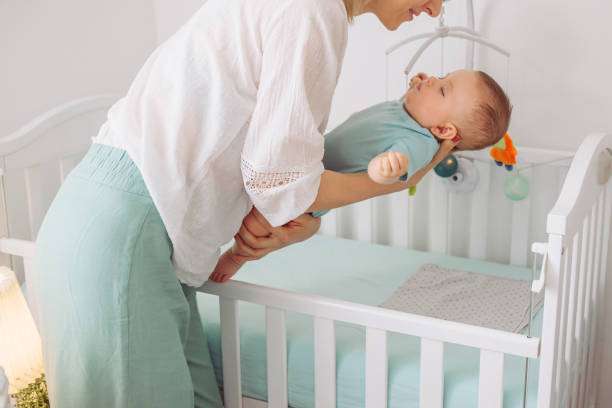
A baby bassinet gives mom some breathing space
Sleep deprivation is the number one cause of postpartum mood swings. One of the design goals of
Baby Bassinet is to help babies fall asleep more easily in a comfortable and safe little space.
Babies fall asleep faster, and mothers don’t need to hold and rock them to sleep all the time.
Newborns have very light sleep. If they need to be held and soothed by their mothers every time, it can cause:
wrist pain
stiff neck and shoulders
Increased burden on the lower back
Emotional breakdown
But the gentle rocking motion of the baby bassinet mimics the rhythm of the womb, helping the baby settle into a calm state more quickly.
When the cradle takes over the role of “continuously soothing the mother to sleep,” the mother finally has a chance to sit down, drink water, rest, and breathe.
This brief rest is crucial for postpartum emotional recovery.
Establishing a controlled parenting rhythm: reducing postpartum anxiety
Postpartum anxiety usually stems from:
Baby cries for no apparent reason
It’s tiring to hold, but she cries as soon as I put her down.
Her sleep-wake cycle was disrupted, and the mother felt a lack of control.
The “Infant Cradle” helps establish a regular, predictable, and controllable daily rhythm.
1. “Letting go and not crying” gives mothers more confidence.
Many cradles have:
Stable oscillation
Soothing music
Soft lighting
Enveloping mattress
All of these can reduce the discomfort a baby experiences when put down.
When a baby can stay quiet in a baby bassinet for several minutes or even tens of minutes, the mother will instantly gain a sense of “control.”
Psychological research shows that
The higher one’s sense of control, the more stable one’s emotions and the lower one’s anxiety.
Reduce the burden on the body and help the mother recover more smoothly.
Postpartum recovery is not just about emotional recovery; it also involves physical pain, fatigue, and hormonal changes.
If a mother holds her baby every day:
Arm soreness
The wound (especially after a C-section) is more painful
tighter waist and back
Nighttime sleep aids are less effective
Prolonged physical discomfort can further amplify emotional instability.
And a baby bassinet provides:
1. “Safe placement points” reduce the time spent holding babies.
This frees up Mom’s hands:
Go to the toilet
Take a sip of water
Have a meal
Take a shower
Take a deep breath
This has a significant impact on postpartum emotional stability.
2. Avoid secondary harm to the body from prolonged “sleeping in a hugging position.”
Avoid the vicious cycle of “waking up as soon as you put her down after holding her for a long time” and reduce irritability caused by fatigue and pain.
Baby Bassinet helps mothers maintain optimal psychological distance.
Some mothers are emotionally unstable because they are “clingy to their babies and unable to get away.”
baby bassinet lets mom:
See the baby
I can hear breathing
Always able to care
But you don’t need to hold it all the time.
This dual experience of “emotional connection + physical freedom”
is precisely the psychological balance most needed after childbirth.
Baby Bassinet helps mothers regain their daily self-care abilities.
Many postpartum mothers find themselves in a dilemma because their babies can’t bear to be separated from them:
Unable to take a shower
Unable to eat a proper meal
Unable to tidy the room
I can’t be separated from my baby for even a minute.
These factors can all lead to the accumulation of psychological stress.
A stable baby bassinet allows the baby to sit, lie down, and rest, while the mother can do the following:
Drink a cup of hot water
Eat a normal meal
Simple tidying up of the environment
Changing clothes
Washing hair and taking a bath
Every time a mother completes a simple task, she gains a little bit of mental resilience.
Postpartum recovery is built up from these small moments of resilience.

Reduce the need for helpers and lower the risk of family conflict.
Many postpartum emotional problems are not caused by the baby but by family relationships:
The husband felt that his mother was emotional.
Family involvement actually increases stress.
Disagreements over feeding and putting to sleep
Baby bassinets can reduce dependence on others, allowing mothers to:
The ability to independently put someone to sleep
The ability to independently care for a baby
The ability to control one’s own pace
When a mother no longer relies on a lot of external help, her confidence will directly increase, family friction will decrease, and emotional recovery will be smoother.
Baby Bassinet gives mothers a truly safe and secure psychological space.
The baby bassinet is not only a physical space but also a psychological space.
When the baby is resting peacefully in the cradle, the mother automatically enters a certain state:
“You don’t need to worry about the baby for now.”
This sense of physiological reassurance will make:
Heart rate decrease
Anxiety levels decreased
Breathing rhythm becomes steady
The brain gets rest
A baby sleeping soundly is the best psychological medicine for a mother.
Conclusion:
Baby bassinets’ benefits for postpartum mood stem from:
Help your baby fall asleep peacefully
Reduce the physical burden on mothers
Increase mother’s sense of control
Establish a regular parenting rhythm
Give mother a short but crucial rest
Improve the overall emotional stability of the family
If you are experiencing postpartum mood swings, remember:
You are not alone, and a baby bassinet can be a great companion during your recovery.


