
A baby bassinet is not only a haven for babies to sleep but also an important space for early exploration and cognitive development. Newborns spend most of their time in the cradle, and this small, safe space becomes their first starting point for observing the world. Through scientific planning and parent-child interaction, the baby bassinet allows babies to freely touch and observe toys in a safe and comfortable environment, cultivating their sensory and cognitive abilities while strengthening the emotional bond within the family.
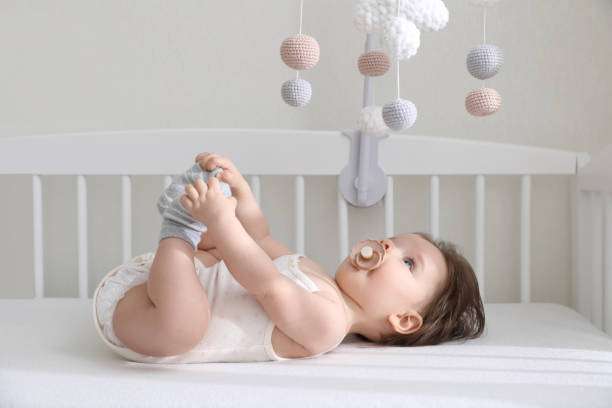
baby bassinet in early baby exploration
1. Safe and comfortable space
Baby Bassinet provides a stable and secure sleep environment for your baby. Compared to a temporary mattress placed on the bed, the Baby Bassinet’s size and support are specially designed to better fit the newborn’s body. The cradle’s soft mattress and breathable material make your baby feel comfortable when they wake up in the morning, helping to establish a sense of security.
A short story: Every morning when Xiaomi wakes up, the first thing she sees is the black and white contrasting toy on her baby bassinet. Her eyes are glued to the toy, and she reaches out to grab it. Her parents gently touch it for her, and she smiles happily. The baby bassinet allows babies to explore in a safe environment and fills family mornings with warmth.
2. Help establish a regular sleep schedule
Baby Bassinet is not just a sleep aid but the cornerstone of a baby’s sleep schedule. A consistent sleep environment helps babies gradually develop a biological clock, distinguishing between day and night. Regular sleep patterns are beneficial for digestion, mood, and cognitive development.
Baby Bassinet ‘s First Toy Exploration
1. Visual stimulation
Babies are very sensitive to light and color after birth. Hanging brightly colored or black-and-white contrasting toys around a baby can attract their attention and help them learn to follow moving objects with their eyes.
Case Study: When Xiao Jie first saw the plush toy in the baby bassinet, his eyes were glued to the toy, and the corners of his mouth turned up slightly. His parents gently guided him to reach out and pat it, and the baby happily made a gurgling sound. The baby bassinet became a place for training the baby’s visual and hand-eye coordination.
2. Auditory stimulation
Near a baby bassinet can help babies learn to identify the source of sounds, activate their nervous system, and improve their attention span and emotional regulation. Gentle music also helps babies transition smoothly from sleep to wakefulness.
3. Tactile sensation
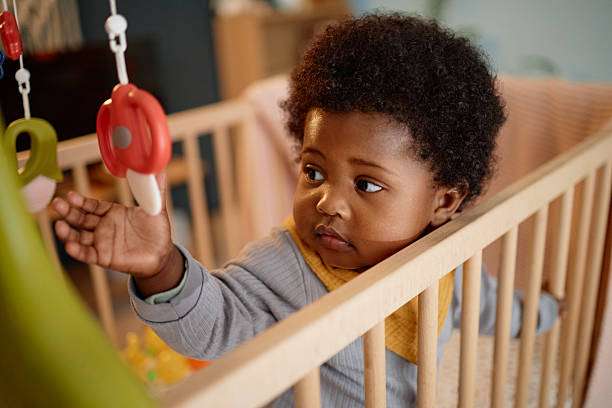
Baby bassinets provide babies with a rich tactile experience. Babies explore different textures by grasping, pinching, and patting, while simultaneously developing their fine motor skills. The safe environment of the baby bassinet allows babies to explore with peace of mind, while parental presence adds to their sense of security.
Baby Bassinet Toy Selection Guide
Safety: Soft, with no small parts or sharp edges, and made of non-toxic and easy-to-clean material.
Visual stimulation: High-contrast patterns and brightly colored pendants attract the baby’s visual attention.
Tactile experience: Pluff or rubber toys of different materials and textures enrich the tactile experience.
Sound feedback: Gentle ringing or soft music helps babies develop a causal understanding of movement and sound.
Tips for guiding baby bassinet exploration
Safe placement: The cradle is stable, and the toys are hung at a moderate height, within the baby’s reach but not choking.
Gradual introduction: Initially, provide one or two toys to help the baby focus their attention; gradually increase the variety and number of toys as the baby grows.
Interactive observation: Parents gently communicate and smile to encourage their babies to touch toys, thus creating parent-child interaction.
Record and observe: Observe the baby’s reactions to different toys, understand their interests and development, and provide a reference for subsequent early education.
Baby Bassinet explores the sense of family rituals.
Fixed time period: Arrange cradle toy exploration activities when the baby is awake and in a good mood to establish a routine.
Parent-child interaction: Parents or siblings participate in the interaction to increase emotional connection.
Combining safety with ritual: Baby bassinet exploration not only stimulates the senses but also becomes a family morning ritual, fostering anticipation and a sense of security in the baby.
Precautions
Avoid having too many toys, as they can be distracting or increase the risk of choking.
Clean toys regularly to maintain hygiene.
Observe your baby for signs of fatigue and give them a rest or change their activity accordingly.
The cradle hanger is securely fastened to prevent it from falling and injuring the baby.
Conclusion
A baby bassinet is not only a space for babies to sleep but also an important place for sensory development and parent-child interaction. With scientific arrangement and parental companionship, babies can safely observe, touch, and listen to toys in a baby bassinet, cultivating hand-eye coordination, cognitive abilities, and emotional regulation skills.
At the same time, the baby bassinet is also the core of the family morning ritual. Parents’ company, smiles, and gentle encouragement make the exploration process not only a skill development activity but also an emotional connection. Every moment of reaching out to grasp or gazing at a toy records a baby’s growth and fills the family morning with warmth and meaning.


