Baby bassinet suitable for babies who are easily startled? Is the bedside version worth choosing?

Many new parents encounter a common problem: their baby wakes up as soon as they are put down, wakes up easily after sleeping for a short time, sleeps well in their arms but cries as soon as they are put down. Especially in the first few months after birth, babies have light sleep, a strong startle reflex, and are sensitive to their environment, all of which can easily cause them to wake up frequently. At this time, many families consider whether to prepare a baby bassinet, especially a crib-side model that can be used close to the bed.
So—is this kind of device really suitable for babies who are easily startled? Are bedside models more appropriate? This article will provide a systematic analysis from the perspectives of sleep mechanisms, safety, user experience, and key points for selection.
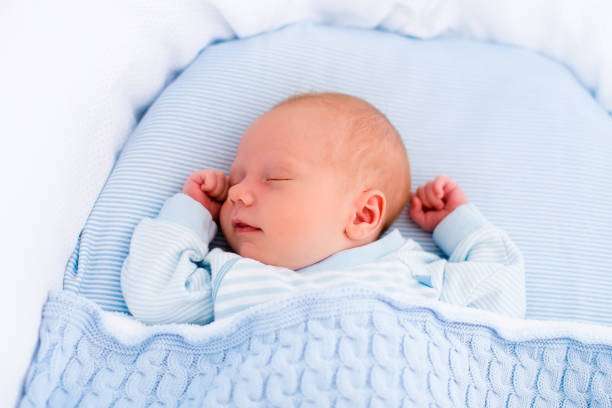
Why are babies so easily startled?
Newborns in the 3-4 month stage have several typical sleep characteristics:
Short sleep cycles (approximately 40–50 minutes per cycle)
High percentage of light sleepers
A noticeable startle reflex
Sensitive to sound and light
Leaving an embrace can easily create a sense of “disappointment.”
Many parents find that their child can sleep for two hours while being held but only for ten minutes when put down. This is not because the child is “used to being held,” but rather a reaction caused by changes in security and environment.
A friend of mine encountered this situation during her postpartum period. She later switched to a baby bassinet that is placed close to the bed. After the baby fell asleep, she no longer needed to move the baby to a crib further away, and the number of times the baby woke up was significantly reduced.
baby bassinet offer to babies who are easily startled?
Using a baby bassinet appropriately can indeed help babies at certain stages, mainly in the following ways:
Gentle rocking feels more like being hugged.
Many baby bassinet toys come with a gentle rocking motion, mimicking the rhythm of being held. For babies with a pronounced startle reflex, this subtle movement can be helpful:
Buffering sudden action
Prolong the sleep onset stage
Reduce the startle when putting down
It needs to be emphasized that it is “gentle and gradual,” not violent shaking.
A private yet intimate sleeping space
The biggest advantage of a bedside baby bassinet is its proximity.
The baby has their own space but can still sense the parents’ scent and voice:
Nighttime soothing is faster
Breastfeeding is more convenient
Reduce the number of times you pick someone up and put them down.
Parents do not need to get up frequently
These types of baby bassinets are especially useful during periods of frequent nighttime awakenings.
Reduce the likelihood of being startled during the transfer.
Many awakenings occur during “distraction” actions:
Holding → Walking → Putting down → Temperature change → Different bed surface firmness → Waking up
A bedside cradle minimizes the transfer distance, making it especially suitable for:
Babies with light sleep
Babies who have difficulty falling asleep
Babies who wake up frequently at night
Baby bassinet crib vs. regular crib: Which is better for a startled baby?
From the perspective of actual user experience:
A bedside baby bassinet is more suitable for the following situations:
Frequent night awakenings
Frequent nighttime feedings required
Falling asleep requires comforting
Parents’ sleep is easily interrupted
Neonatal stage
A regular crib is more suitable:
A relatively stable sleep rhythm has been established.
Reduced nighttime awakenings
Able to fall asleep independently
Older babies
Many families use a “phased transition method”:
First use a baby bassinet, then transition to a crib after it has stabilized.
Which babies are more suitable to use a baby bassinet?
baby bassinet is more suitable, including:
A noticeable startle reflex
I woke up as soon as I put it down.
Needs physical contact to comfort
Mild flatulence (gentle shaking helps).
Waking up frequently at night looking for someone
However, not all babies need a baby bassinet. Some babies are deep sleepers and adapt quickly, so a regular bed works just fine for them.
What are the key factors to consider when choosing a bedside cradle?
If you decide to buy a cradle, we recommend focusing on these:
Safety fixed structure
Able to connect securely to the bed
It won’t slide
No gaps
Mattress support
It should not be too soft
Spinal support
breathable material
The amplitude of the shaking is controllable
It has a locking function
Shaking can be turned off
It will not shake significantly on its own.
Height adjustment function
The baby bassinet beside the bed must be height-adjustable to ensure it is level with the bed.
Mesh side
Improve breathability
Easy to observe the baby
Reduce the risk of stuffiness
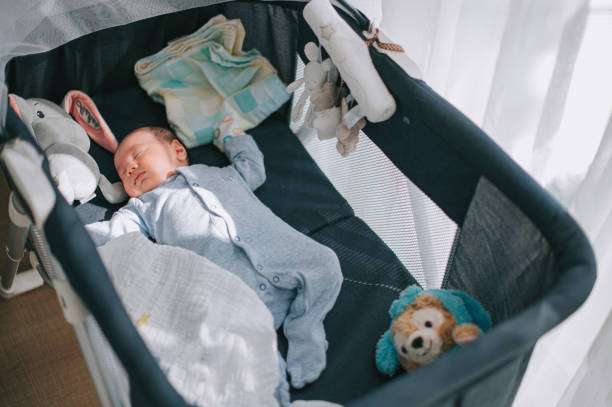
Precautions when using a cradle
Even the best cradle needs to be used correctly:
Do not use pillows or thick mattresses
No dolls
No soft bedding
Shaking is only used as an aid, not as a substitute.
Stop using it once your baby can roll over.
A friend who works in pediatric healthcare once reminded me that a baby bassinet is a “sleep aid,” not a “long-term sleep solution.”
Common misconception: Will rocking someone to sleep create a dependency?
This is a concern for many parents.
The key lies in how it is used:
I always need to be rocked to fall asleep.
In the early stages of falling asleep, you can use gentle rocking and
Gradually reduce the frequency of rocking.
Most babies will not develop a long-term dependence on baby bassinets due to short-term use.
FAQ (Frequently Asked Questions)
Q1: My baby is easily startled. Is a baby bassinet really effective?
It can be helpful for some babies, especially those in the light sleep stage or those with a strong startle reflex. However, the effect varies from person to person.
Q2: Is it unsafe to use a baby bassinet next to the bed?
As long as the structure is solid, the product is installed correctly, and it is seamlessly connected to the bed, compliant products are safe.
Q3: Can I rock it all night?
It is not recommended to rock a baby bassinet continuously throughout the night. The baby bassinet is better suited as a sleep aid than for continuous shaking.
Q4: Is it no longer suitable to use a cradle after a few months?
Normally, once a baby starts rolling over, the rocking function should be stopped or locked.
Q5: If someone is easily startled, is it necessary to buy a baby bassinet?
It’s not necessary. Try wrapping, white noise, and stable placement techniques first, then decide if you need a baby bassinet.
Q6: Will bedside models affect adults’ sleep?
Most parents reported that it was actually more convenient to take care of their children at night, and their overall sleep quality improved.
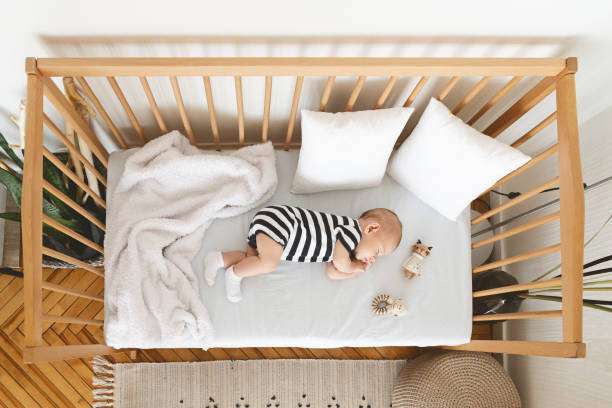
Summarize:
Therefore, a bedside baby bassinet is indeed a transitional sleep tool worth considering. It can’t “solve everything,” but it can reduce the difficulty of caregiving, decrease wakefulness during transitions, and improve nighttime efficiency.
The key is not whether to buy or not, but to choose the right product, use it correctly, and make a phased transition.
If you’re struggling with your baby’s frequent startling awakenings, consider a safe, sturdy, height-adjustable bedside baby bassinet as a transitional sleep solution. Choosing the right design and structure is more important than simply focusing on functionality. Compare materials and safety certifications now to find the one best suited for your family.


