My baby is used to the baby bassinet and wakes up as soon as I stop playing. How can I adjust this?
My baby is used to the baby bassinet and wakes up as soon as I stop playing. How can I adjust this?
Many parents encounter this phase: their baby sleeps soundly in the baby bassinet, but as soon as they stop, the baby immediately opens their eyes, whimpers, or even wakes up crying.
Some people might start to blame themselves:
- Should we not have used it in the first place?
- Did we make our baby “addicted”?
- Will we never be able to live without it again?
If you’re currently in this stage, don’t rush to doubt yourself. It doesn’t mean you’ve done anything wrong; it simply means your baby’s development has reached this point.
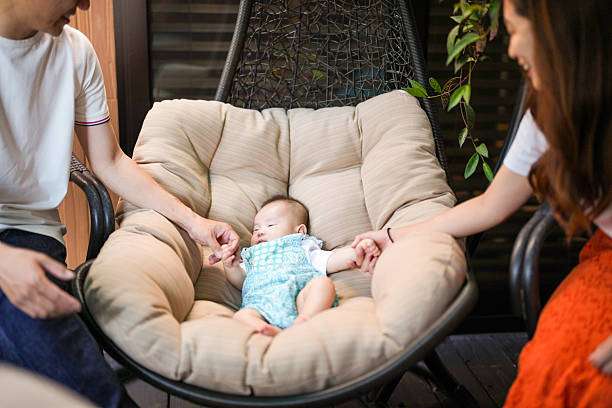
Why do babies “depend” on the frequency of baby bassinet shaking?
From a baby’s perspective, rocking is not a “broken habit” but a familiar and reassuring cue.
While in the mother’s womb, the baby experiences:
- Slight swaying while walking
- The sense of rhythm from breathing and heartbeat
- Continuous and stable body rhythm
A baby bassinet essentially replicates this early sense of security. So when the rocking suddenly stops, it’s like the environment has been “paused” for the baby.
I’ve experienced something similar. Even though the baby’s eyes were closed and my hand had just left the cradle, the baby would wake up again within minutes. It was really disheartening.
This is not dependence but rather a lack of complete internalization of a sense of security.
The baby bassinet wakes up when rocked, which is actually a sign of the transition period.
Many parents worry, “Won’t this make it increasingly difficult to quit?#8221;
However, from the perspective of sleep development, this stage often means that the baby can enter deep sleep when rocked but has not yet learned to transition to sleep when still.
Simply put, it means:
- Sleep
- Can sleep
- But it’s not enough to “sleep independently.”
This is a very common and very short transitional phase.

Avoid sudden stops; rhythm is key.
The easiest way to make a baby react is to suddenly stop shaking them completely.
What might be just “turning off a function” for an adult could be a sudden change in environment for a baby.
A gentler approach is to gradually change the frequency:
- Continue this routine for a short period of time after falling asleep.
- Gradually shorten the shaking time.
- Finally, the shaking should only occur during the “pre-sleep stage.”
Many parents have reported that it’s not that their babies can’t be separated from their parents, but rather that they stopped using the facilities too quickly.
Making “Quiet State” Predictable
The baby isn’t afraid of quiet but rather of uncertainty.
Before you stop shaking, you can add some stable, unchanging signals, such as
- A consistent, gentle, soothing tone
- Familiar white noise
- Same light brightness
Even if the shaking stops, the baby can still feel, “The environment hasn’t changed; I am safe.”
A daytime “rhythm” can affect sleep at night.
Many parents only worry at night, neglecting the daytime.
If it’s during the day:
- Disorderly schedule
- Nap time is too fragmented
- Too much or too little stimulation
It is more likely to cause “waking up as soon as the rocking stops” at night.
Recommended adjustments to be made starting during the day:
- Try to maintain a consistent nap time during the day.
- Engage in more natural activities while awake.
- Avoid excessive stimulation in the evening.
When babies have more control over their daytime rhythm, their dependence on baby bassinet rocking at night will naturally decrease.
When is it not necessary to “rush to change”?
There are several situations where adjustments are not necessary for the time being:
- The baby is still very young.
- The number of times I wake up at night is within an acceptable range.
- The parents did not appear visibly tired or anxious.
If using a baby bassinet helps the whole family sleep better, then it’s a reasonable transition tool right now.
Parenting is never a competition; at some stages, there’s no need to “solve it immediately.”
When can we start the gradual transition?
Signals that can be adjusted include:
- The baby’s awake time during the day has increased significantly.
- Falling asleep faster
- Reduced nighttime awakenings
- The response to environmental changes is not as intense.
All of this indicates that the baby is preparing for a more stable sleep pattern.
FAQ:
Q1: Will my baby never be able to sleep independently again because of the baby bassinet?
A: In the vast majority of cases, no. Rocking is just a transitional tool and will not hinder the development of independent sleep.
Q2: Do I need to deliberately “give up” the baby bassinet?
A: No, you don’t need to force yourself to give it up. Just gradually reduce it as your baby grows.
Q3: My baby cries as soon as the bassinet stops. Is something wrong?
A: If everything else is normal, it’s most likely a reaction to the change in rhythm, rather than physical discomfort
Q4: Can I use a baby bassinet at night instead of during the day?
A: Yes, but you should make sure to establish sufficient security and activity levels during the day
Q5: My parents are too tired. Does that mean my approach is wrong?
A: Not necessarily. Sometimes it’s just that they’re going through a tough phase.

Summarize:
When a baby wakes up as soon as you stop rocking them, many parents’ first suspicion is actually about themselves.
But parenting is never “all right from the start.” You’re already doing your best to help your baby sleep more soundly.
It might be worth revisiting the frequency settings, timing of use, and daytime rhythm pairings for the baby bassinet.
Related Posts

Is your baby too dependent on being held to sleep? Maybe it’s not your fault; a baby bassinet might be a gentle transitional option.
-
Posted by
 Jones Emma


