
A baby’s safety and comfort are every parent’s top priority. Especially when using a baby bassinet, proper placement is crucial for the baby’s sleep quality, healthy development, and prevention of accidents. This article will explore the optimal placement for your baby in the bassinet to ensure a comfortable and safe sleep.
Make sure your baby is lying flat on their back.
One of the most important principles for baby placement is to ensure that the baby is always lying flat on their back. Studies have shown that lying flat on their back is one of the keys to preventing Sudden Infant Death Syndrome (SIDS).
Why is lying flat on your back the safest position?
Lying flat on your back reduces the risk of suffocation for babies, especially newborns. This position helps keep the baby’s airway open and prevents the baby’s face from being covered by a mattress or pillow when face down, which could obstruct breathing.
How to ensure your baby is lying flat?
Make sure your baby’s head, back, and buttocks are always on the same plane. Do not place your baby on one side when in a baby bassinet to avoid their head falling down.
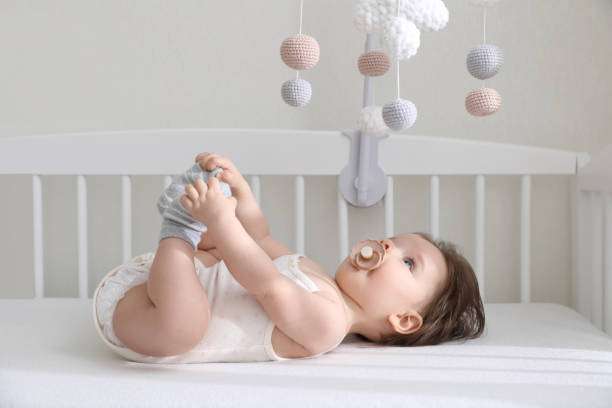
Distance between the baby’s head and the edge of the baby bassinet
Placing your baby in the baby bassinet, make sure there is an appropriate distance between your baby’s head and the edge of the bassinet. This is to prevent your baby from accidentally rolling or slipping onto the edge of the bassinet, avoiding collisions or falls.
Recommended distance:
Keep the baby’s head about one to two inches (2.5-5 cm) away from the edge of the baby bassinet, ensuring that the baby has enough room to move around in the bassinet but will not slip to the edge of the bassinet.
Avoid using pillows:
Babies should not use any pillows or soft padding in their baby bassinet to prevent suffocation or discomfort. Using overly soft items, such as pillows, can cause pressure on the baby’s face, increasing the risk of suffocation.
Keep the baby’s arms free.
When placing your baby in a baby bassinet, make sure their arms are not restricted. While swaddling (such as with a swaddle blanket) can help your baby feel secure, overly tight swaddling can restrict their movement and may affect blood circulation.
How to swaddle a baby?
Gently wrap the baby’s arms, allowing them to stretch freely. Ensure the swaddle is snug but not too tight, so it doesn’t restrict the baby’s breathing or movement. The swaddle should allow the baby’s arms to stretch freely and move easily.
Avoid letting your baby get close to the edge or sides of the baby bassinet.
To prevent any accidents to your baby, ensure that your baby is not near the edge or sides of the bassinet. If the baby bassinet does not have a safety rail, the baby may be accidentally pushed to the outside of the bassinet, increasing the risk of falling.
How to avoid this? Ensure your baby is placed in the center of the
bassinet and always maintain an even distance from both sides. The baby’s body should be symmetrically positioned, avoiding any leaning to one side.
Keep the baby’s feet in a natural position
A baby’s feet should not be forcibly pressed against the bottom of the cradle, especially for newborns, whose legs need more room to move to promote blood circulation and stretch.
Recommended position:
Let your baby’s legs rest comfortably on the bottom of the bassinet, keeping them naturally bent. Avoid pressing your baby’s legs against the edge or bottom of the baby bassinet, as this will help make your baby more comfortable.
Avoid restricting your baby’s foot movement:
Try to avoid constricting or limiting your baby’s feet to one spot on the baby bassinet so as not to affect their mobility and comfort.
Check the safety of baby bassinet
The baby bassinet is stable and secure when placed in it. The bassinet should not be loose or unstable, as this could cause excessive shaking or tipping over.
How to check the safety of a baby bassinet?
Before each use, ensure the baby bassinet’s support frame is secure and undamaged. Check the bassinet’s rocking mechanism to ensure it doesn’t shake excessively. The bassinet mattress should fit the baby well; a mattress that is too soft may cause the baby to sink in, while a mattress that is too firm may be uncomfortable.
Cradle temperature and environmental comfort
Your baby bassinet involves more than just physical location; it also affects temperature and the comfort of the surrounding environment. Ensuring your baby is in a warm but not stuffy environment helps promote comfortable sleep.
Optimal temperature:
The ambient temperature for a baby’s sleep should be between 65°F and 72°F (18°C and 22°C). Avoid overheating, as this increases the risk of Sudden Infant Death Syndrome (SIDS).
Environmental noise:
Avoid exposing your baby to too much noise in your baby bassinet, especially loud noise. Gentle white noise can help your baby fall asleep, but loud noises can make them restless.
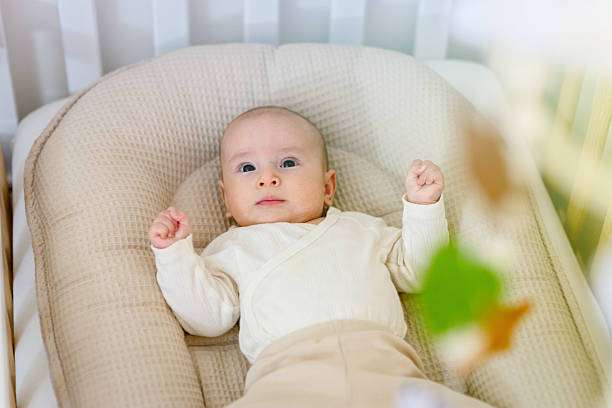
Proper adjustment of the cradle: avoid excessive rocking
While the baby bassinet is designed to help babies fall asleep, excessive rocking can make them uncomfortable or even cause dizziness. Keep the bassinet gently rocking to help your baby sleep comfortably.
The effect of gentle rocking:
The best way to rock is a gentle back-and-forth motion, mimicking the feeling in the womb, which helps the baby fall asleep peacefully. However, avoid vigorous rocking and keep the cradle within a moderate range.
Summarize:
Finding the optimal position for your baby in their cradle not only ensures their safety but also helps them get enough restful sleep. By ensuring your baby lies flat on their back, avoiding them near the edge of the cradle, adjusting their position appropriately, and creating a safe and comfortable sleep environment, parents can effectively reduce risks and promote their baby’s healthy development. As parents, understanding how to properly position your baby and keep the cradle safe is crucial for ensuring they sleep soundly every night.
How do you position your baby in the crib? Share your experiences and methods in the comments section!


