Bedside Baby Cradle: 3 Miracles—Dads Easily Participate in Nighttime Baby Care, Making Families Happier!

For new parents, the biggest challenge during the newborn period isn’t the daytime but the endless nighttime feedings and soothing. In many families, the burden of nighttime care disproportionately falls on the mother, hindering her postpartum recovery and causing the father to miss precious time building a bond with the baby. A bedside baby bassinet can solve this problem.
But what if there were a tool that could physically break down the barriers to nighttime care, making fathers’ involvement easy, efficient, and even enjoyable?

How to create accessibility for a baby bassinet by the bedside
The Baby Bassinet bedside design aims to solve a core problem in nighttime care: physical barriers. It allows babies to safely enjoy a highly accessible and independent sleeping space.
Roommate Co-occurring, Separate Bed: A Balance of Safety and Convenience, Defining Advantages: The side wall of the baby bassinet bed can be lowered or removed and securely attached to the parents’ bedside using special fasteners. This perfectly aligns with the American Academy of Pediatrics’ recommended principle for safe sleep in the same room but in a separate bed.
Eliminating barriers to getting up: Compared to traditional cribs that require you to get up, move around, or even bend over in the dark, a baby bassinet placed beside the crib keeps your baby within easy reach when Dad is involved or Mom is caring for them. This small difference in distance greatly improves parents’ reaction speed and efficiency at night.
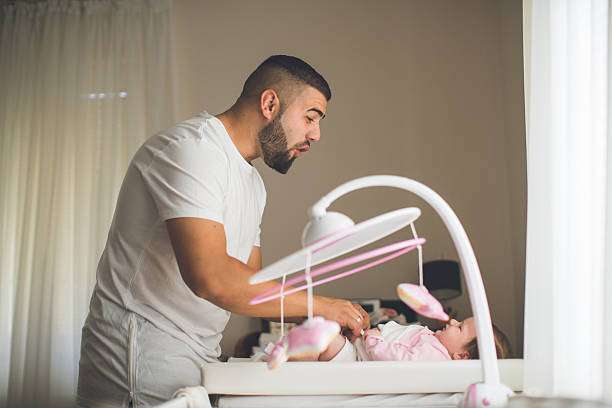
Optimizing nighttime feeding routines: The perfect tool for bottle feeding: For families using formula or expressing breast milk via bottle, the bedside baby bassinet especially highlights the value of father involvement. Fathers don’t need to leave the bedroom; they can simply turn around and pick up the baby to feed. After feeding, fathers can then take on tasks such as burping and changing diapers.
Relay soothing: Even in breastfeeding families, after the mother finishes feeding, the task of soothing and putting the baby to sleep can be handed over to the father who is nearby. The easy accessibility of a bedside baby bassinet makes this “nighttime relay” smooth and seamless, avoiding the hassle of moving the baby to another room.
Family benefits of co-care
Once the physical problem of the bedside baby bassinet is solved, deeper family benefits emerge: a fairer distribution of nighttime responsibilities and a reduction in the burden on mothers.
Reduce the burden on mothers: Ensure high-quality rest
Key to postpartum recovery: Postpartum mothers need sufficient and uninterrupted sleep to support physical recovery and balance hormones. The constant stress of nighttime feedings is one of the main factors contributing to postpartum fatigue and mood swings.
Support for a shift system: A bedside baby bassinet creates the physical conditions for shared care, making it easier for couples to establish a shift system. For example, the father can be responsible for soothing and bottle-feeding from 10 pm to 2 am, ensuring the mother gets a full night of high-quality, deep sleep. This kind of support cannot be replaced by any verbal comfort.
Childcare equality: more than just sharing responsibilities
Eliminating default responsibility: Achieving shared care is a key step towards true childcare equality. When fathers actively take on the dirty and tiring work, such as nighttime feedings, family responsibility no longer carries a default gender label.
Boosting Confidence: Fathers’ involvement in nighttime care quickly builds their confidence and competence as primary caregivers. Their firsthand experience of the challenges and rewards of childcare is crucial for establishing strong, close bonds.
Emotional connection: the golden moment for fathers to participate
A bedside baby bassinet provides fathers with a unique opportunity to build a deep emotional bond with their newborns during the moments when they need comfort the most.
Nighttime Feeding: Quiet, Intimate Moments of Solitude: At 2 a.m., the world is quiet, just you and your baby in your arms. Nighttime feeding and soothing times are often private and peaceful. A father’s gentle hugs and whispers during these moments enhance the baby’s familiarity with his voice and scent, building an irreplaceable parent-child bond.
Building Confidence: Successfully soothing a crying baby is the quickest way for a father to boost his confidence in parenting. The convenience of a bedside baby bassinet lowers the barrier for fathers to get involved.
Long-term investment in family well-being
Marital Relationship: When both partners feel their contributions are recognized and their stress is shared, the marital relationship becomes more harmonious. Shared care is the cornerstone of family happiness.
A baby bassinet bedside table is worth far more than a mattress. It’s the starting point for family equality, shared care, and a close parent-child bond. It empowers fathers to become key players in the most crucial stages of parenting.

of co-care : Let your bedside baby bassinet work for you
| Family members | The main benefits of bedside baby bassinet | core keywords |
| Baby | Independent sleep offers safety and accessibility (rapid response), enhancing parent-child bonding. | Security, Connectivity |
| Mother | Reduce the burden on mothers and ensure high-quality sleep and postpartum recovery. | Rest and recovery |
| dad | Fathers’ involvement in nighttime care boosts their confidence in parenting and promotes equality in childcare. | confidence, equality |
How do you divide nighttime care tasks in your family? What role do you think the bedside baby bassinet plays in encouraging Dad involvement? Share your experiences in the comments section to help more new parents!


