
For many new parents, frequent nighttime awakenings by their babies are arguably the most common and frustrating parenting challenge. However, the baby bassinet often plays a crucial but overlooked role in addressing this issue. In fact, a baby’s nighttime awakenings are the result of a combination of psychological, physiological, and environmental factors, and the baby bassinet, as the core of the sleep environment, is closely related to whether a baby can maintain a deep sleep.
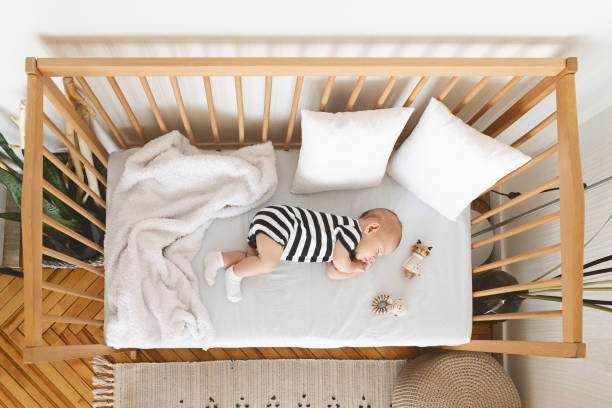
Why do babies wake up frequently at night? Sleep cycles determine everything.
Babies wake up at night more often primarily because their sleep cycles are much shorter than adults’. An adult’s complete sleep cycle is about 90 minutes, while a baby’s is only 40–50 minutes, so they enter light sleep more frequently.
During light sleep, even slight changes in the environment can wake them up. For example, temperature fluctuations, changes in body posture, or even differences in the material or support of the bassinet can all disrupt their sleep.
If the bassinet is too hard or too soft, or if the rocking is uneven, it can make babies in their light sleep stage particularly sensitive.
The main physiological reasons for waking up at night
1. Gastrointestinal discomfort or intestinal colic
A baby’s digestive system is not yet fully developed, and gas, acid reflux, and colic can cause them to cry suddenly at night. A sturdy
A baby bassinet that gently rocks can help relieve discomfort and stabilize a baby’s emotions.
2. Discomfort during teething
From 4 to 7 months, babies often wake up frequently due to itchy and sore gums. Using
A baby bassinet with a secure, swaddle-like feel can help babies fall back asleep more easily after waking up at night.
3. Growth spurt period
During growth spurts such as 2 weeks, 6 weeks, and 3 months, babies are more likely to wake up and demand food.
Using a comfortable, easy-to-hold bassinet at this time makes it easier for parents to handle the situation.
A sense of security is the core meaning of a bassinet.
1. Seeking existence and security
A core psychological reason why babies wake up at night is to confirm that their caregivers are still there.
If the sleeping space is too large or too empty, the baby will lack a sense of being cuddled and is more likely to wake up crying.
Baby bassinets with guardrails and soft material help their babies sleep significantly more soundly at night.
2. Separation anxiety
The period between 8 and 12 months is the peak time for separation anxiety, during which babies become more reliant on a stable sleeping environment. A
A baby bassinet that is fixed close to the baby and not easily moved can help the baby fall back asleep more quickly when they wake up due to the familiar environment.
3. Bedtime dependency and sleep onset methods
If a baby is used to being held or nursed to sleep, they will cry loudly when they wake up at night and find that the environment has changed, demanding “new sleep conditions.”
Using a suitable baby bassinet can help your baby develop the habit of “falling asleep in the bassinet,” fundamentally reducing the number of times they wake up at night.
Environmental factors determine the number of times you wake up at night, and the bassinet is one of the most crucial elements in this process.
The following environmental factors are closely related to a baby waking up at night, and these can be improved by choosing a suitable bassinet:
1. Temperature
Too hot or too cold can both affect sleep. A breathable baby bassinet helps maintain a comfortable temperature.
2. Light
A baby’s melatonin production is very easily affected by light.
A baby bassinet with blackout curtains or side panels can help reduce interference.
3. Sound
A quiet and stable sleep environment is especially important for babies. A sturdy, non-shaking baby bassinet that doesn’t make any rubbing noise will reduce the likelihood of them being startled awake at night.
4. Tactile stimulation
A mattress that is too soft or too firm can make a baby sleep restlessly.
High-quality baby bassinet mattresses typically come with a supportive mattress to reduce startling awakenings.
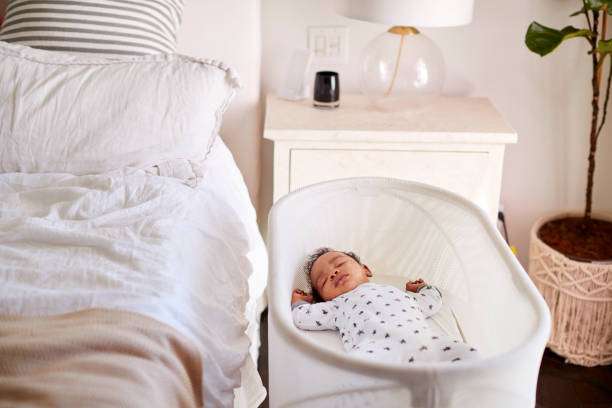
Reasons for nighttime awakenings at different ages and how a bassinet can help.
0–3 months: Primarily physiological needs
hunger
Startle reflex
Using a snug, supportive bassinet can significantly improve a sense of security for people with colic.
4–6 months: Sleep regression period
rapid brain development
Teething discomfort
At this stage, babies need a stable bassinet to reduce overstimulation as they explore their environment.
7–12 months: Separation anxiety
I want to find a caregiver more at night.
Environmental changes can cause alert babies
to fall asleep more quickly because of the familiar baby bassinet.
1–2 years old: Language development and increased dreaming
Emotionally sensitive
a baby with nightmares
can reduce nighttime anxiety.
How can I use Baby Bassinet to improve my baby’s nighttime waking?
Here are some methods commonly used by scientific parenting experts:
1. Maintain a consistent sleep environment
When babies wake up at night and see the same baby bassinet environment, they will fall back asleep more quickly.
2. Establish a bedtime ritual
Let your baby know: “Going into the baby bassinet = It’s time to sleep.”
3. Minimize lifting and carrying before bedtime.
Let your baby fall asleep in a baby bassinet without needing to be held or rocked.
4. Keep the baby bassinet clean.
Do not place too many toys to avoid visual stimulation.
5. Place the baby bassinet next to the parents’ bed.
Reduce the baby’s sense of insecurity when waking up at night.
How do I determine if I need to switch to a more suitable baby bassinet?
If you find:
Babies are easily startled in their bassinets.
The bassinet is too hard/too soft
The bassinet is unstable and easily shakes.
A bassinet makes it very inconvenient for you to pick up your baby.
My baby always kicks his arms and legs and doesn’t sleep soundly.
All of this indicates that you need a more comfortable and ergonomic baby bassinet.
A good baby bassinet is not just “an extra piece of furniture.”
but a key parenting tool that directly affects the number of times a baby wakes up at night and the quality of sleep for parents.
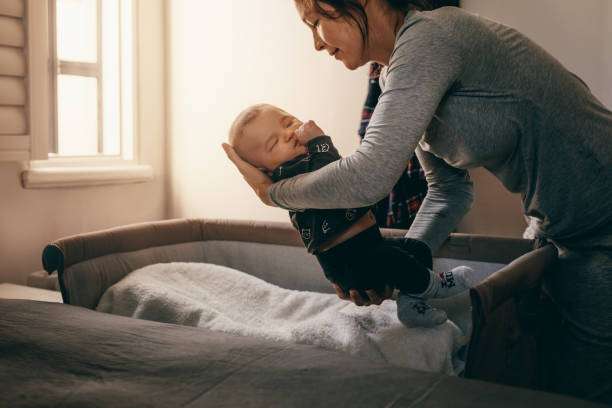
Conclusion:
Nighttime awakenings are a part of a baby’s growth, but with scientific understanding and a more suitable sleep environment, the frequency of nighttime awakenings can be significantly reduced.
If you are looking for:
For more stable sleep, fewer nighttime awakenings, a more secure and cuddly environment, and easier nighttime care for parents, you should definitely choose a baby bassinet that is truly suitable.
Want your baby to sleep more soundly? Choose a high-quality baby bassinet now and make every night relaxing and wonderful again.


