Baby Bassinet: How to create a safer and more comfortable growth environment through scientific placement.

Preparing a room for your baby is one of the sweetest yet most challenging tasks for every new parent. How can you optimize your baby’s room space? Where is the safest and most conducive place for your baby to fall asleep? How should you manage light, noise, temperature, and ventilation? These seemingly simple decisions directly impact your baby’s sleep quality, sense of security, and your parenting experience.
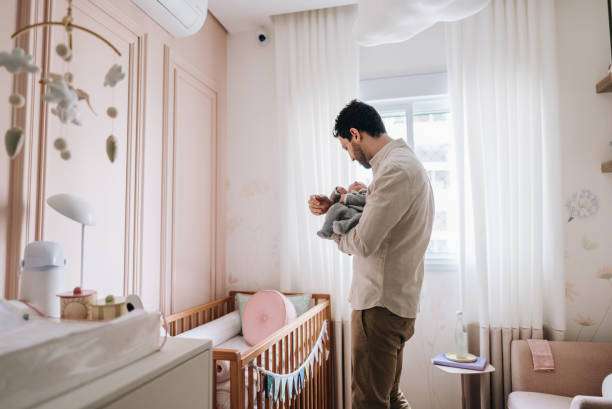
Why is optimizing the space in a baby’s room especially important for the placement of the cradle?
1. Improve safety and keep newborns away from risks.
A cluttered nursery or poorly arranged furniture can increase the risk of falls, bumps, and falling objects. The placement of
The baby bassinet is particularly critical and must be kept away from potential hazards such as electrical outlets, windows, hanging objects, and large furniture.
2. Help your baby establish a stable sleep environment
Newborns sleep 14–17 hours a day.
An optimized nursery provides a sleeping area with stable lighting, low noise, and a comfortable temperature, significantly reducing nighttime awakenings.
3. Improve the efficiency of parents’ nighttime childcare.
The room is well-planned, and there are baby care supplies such as diapers, wipes, and clothes near the cradle.
making it easier to change diapers, soothe the baby to sleep, and comfort them at night.
4. Help your baby establish a sense of “territorial security.”
Clearly defined zones (sleep area, changing area, activity area) help babies gradually develop environmental awareness, and
A stable and safe baby bassinet location can help babies fall asleep faster.
Three principles for optimizing baby room space
(Principle 1) Clear movement path, making it easier to hold the baby and preventing tripping.
Sufficient space should be left from the doorway to the cradle, storage cabinets, and the nursing area.
Especially when moving around with the baby at night, unobstructed movement can significantly reduce accidents.
(Principle 2) Stay away from high-risk areas
Avoid placing the baby bassinet in the following locations:
Area near a window exposed to direct sunlight (strong light + large temperature difference)
Below the air vents of air conditioners or heaters (where one is prone to catching a cold).
Areas with dense sockets and wires
Near large furniture (risk of tipping over).
(Principle 3) Light objects should be placed close to the cradle, and heavy objects should be placed away from the cradle.
Lightweight items such as diapers and comfort blankets should be placed close to the baby bassinet for easy handling by parents.
Heavy items such as cabinets and bookshelves should be kept away to prevent collisions or tipping over.
The best place to put a baby bassinet
A baby bassinet is key to optimizing space in a baby’s room. Here are the best placement suggestions:
1. A location that parents can see at a glance
Newborns enjoy the presence of their parents, as it makes them feel more secure.
Baby bassinets can be placed in:
Enter the room from the front right or front left corner.
Place it against the inner wall but not directly against it, leaving a 10-20 cm ventilation gap.
2. Maintain a distance of at least 1 meter from windows to avoid 80% of common parenting mistakes.
While the area near the window may seem bright and airy, it poses a significant risk to a baby bassinet.
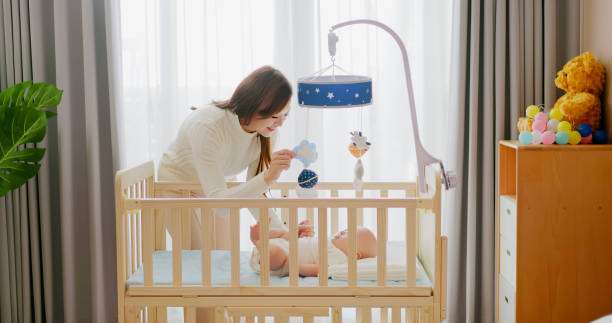
Direct sunlight affects sleep
A large temperature difference leads to catching a cold
The wind was too strong and made the baby uncomfortable.
Curtain cords and window locks pose safety hazards
Recommendation: The cradle should be at least 1–1.5 meters away from the window.
3. Avoid being directly under an air conditioner or heater.
Direct airflow from the air conditioner can cause nasal congestion and coughing in babies.
The best position for the cradle is about 1.5 meters to the side of the air conditioner.
4. Keep away from noise and strong light sources.
Air purifier vents, speakers, bright lamps, and power strips should all be kept away from the baby.
as babies are very sensitive to light and sound.
5. Set up a “nursing work area” next to the cradle.
To improve nighttime childcare efficiency, essential items include:
diaper
wet wipes
comfort towel
Nightlight
nursing pads
Baby bassinet placement strategies for different room types
1. Small-sized nursery (under 8 square meters)
When space is limited, a baby bassinet should be placed “against the wall but with a walkway” and as close as possible to the care area.
Layout example:
Entrance → Traffic flow area → Baby bassinet against the wall → Storage shelf near the window but not touching the window.
suggestion:
Use wall storage
a baby bassinet with storage drawers.
Minimize the number of items that take up floor space.
2. Medium-sized apartments (8–12㎡)
It can be planned as a “baby bassinet sleeping area + changing area + storage area.”
The ideal location for the cradle is in a well-ventilated area in the center of the sleeping area.
3. Large apartments (over 12 square meters)
You can add a co-sleeping sofa or nursing chair.
Baby bassinets offer more flexibility in placement, but the following still applies:
Not by the window
Not near the air vent
Not near tall cabinets
Indirect light
Soft furnishings to make baby bassinet’s surroundings more comfortable
1. Lighting: Soft and safe
Warm light night-light
Double-layered curtains (sheer curtain + blackout curtain)
Avoid direct light shining on the baby bassinet
2. Temperature and humidity control
Temperature 20–24℃
Humidity 40–60%
Do not place a humidifier next to a cradle.
3. Noise
Keep the baby bassinet area as quiet as possible.
If a white noise machine is needed, keep it at least 1 meter away from the cradle.
4. Ground safety
Avoid thick plush carpets;
A small non-slip mat will suffice, making it easier for parents to move around at night.
Incorrect placement vs. correct placement
My friend’s family, whose baby room is 9 square meters, initially placed the cradle by the window, and the result was:
The baby was woke up by sunlight
Unstable winter temperatures
The sound of the wind caused the baby to wake up frequently.
Daytime sleep is extremely unstable
After adjustments:
The cradle was moved closer to the inner wall, the area by the window was converted into a storage area, and a warm-colored night light was added.
The baby’s nighttime awakening frequency decreased from 4 times to 1 time.
Frequently Asked Questions (FAQs):
Can
a baby bassinet be placed under an air conditioner? No, direct airflow can easily cause a cold.
Does a baby bassinet have to be far from a window?
It must be at least 1 meter away.
Is it okay to put green plants next to a cradle?
It’s not recommended, as they are prone to losing leaves and don’t absorb oxygen at night.
Can I put the cradle next to the bed?
Yes, but you need to leave enough space to walk around.
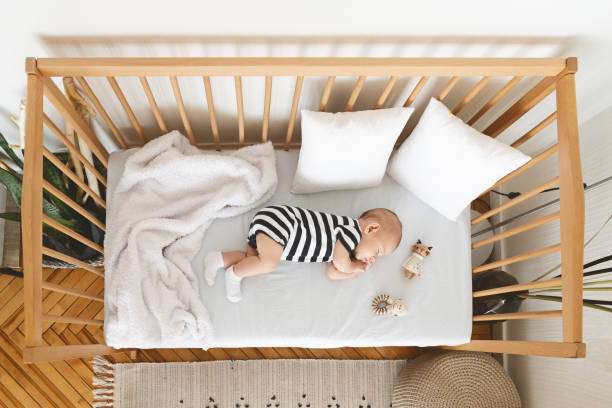
Summarize:
The position of the cradle determines the baby’s sense of security.
Avoid windows, drafts, electrical wires, and tall cabinets.
The smoother the flow of traffic, the more relaxed the parents will be.
The more stable the environment, the better the baby sleeps.
The earlier you optimize your baby’s room space, the more benefits you will receive.
Properly positioning your baby bassinet ensures a safe start to the year. Visit our website for more parenting tips.


